
To successfully navigate a roof insurance claim, we’ll need to understand our policy coverage first, including whether it’s ACV or RCV. After damage occurs, we should document everything with photos, prevent further damage with temporary repairs, and contact our insurer promptly. Working with qualified contractors and being present during adjuster inspections greatly improves outcomes. Understanding settlement offers and common denial reasons positions homeowners for fair compensation. The following guide unpacks each critical step.
Key Takeaways
- Document all roof damage thoroughly with time-stamped photos and videos immediately after discovery.
- Install temporary protective measures like tarps to prevent further damage before filing your claim.
- Select a qualified roofing contractor with insurance claim experience and proper licensing.
- Be present during the adjuster’s inspection and provide detailed repair estimates from your contractor.
- Review settlement offers carefully, looking for inadequate coverage or undervalued components before accepting.
Understanding Your Roof Insurance Policy Coverage
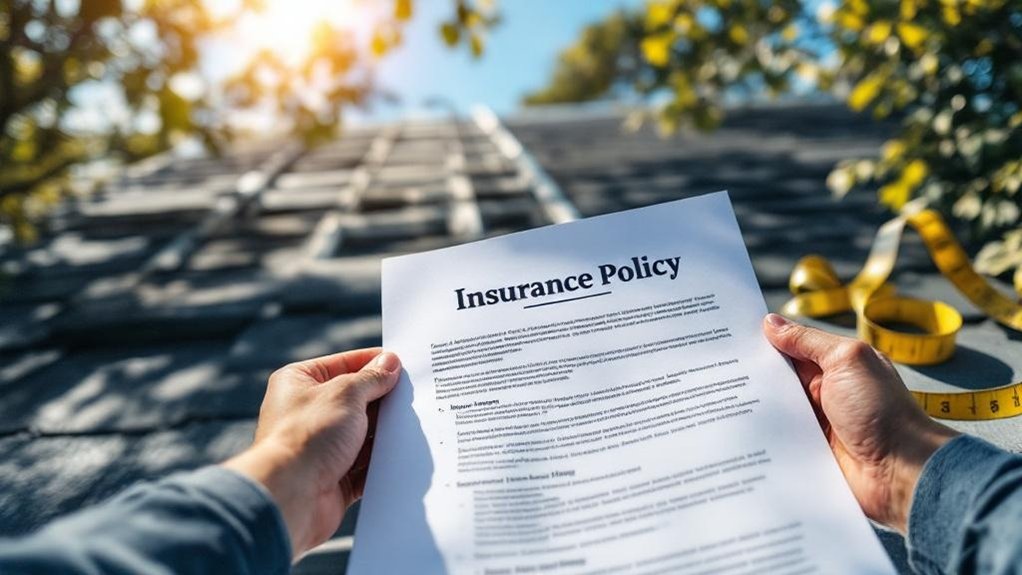
While traversing a roof insurance claim, understanding your policy coverage serves as the critical first step in the process. Most homeowners’ policies include roof coverage under Coverage A (dwelling portion), with HO-3 and HO-5 policies offering open-perils protection against all losses except specific exclusions.
We’ve found that knowing your coverage type—Actual Cash Value (ACV) or Replacement Cost Value (RCV)—dramatically impacts your claim outcome. ACV factors in depreciation based on your roof’s age, while RCV provides full replacement without depreciation calculations. When pursuing an RCV policy, be aware that insurance companies hold back recoverable depreciation until you provide proof that the replacement has been completed. Additionally, having an itemized roofing estimate can significantly aid in the claims process, ensuring all costs are documented accurately.
Be aware of common policy exclusions: wear and tear, lack of maintenance, and gradual deterioration typically aren’t covered. Insurance companies also consider roof material, age, condition, and geographic location when determining coverage eligibility and premium rates.
Immediate Steps After Roof Damage Discovery
When you discover roof damage, we recommend taking immediate photos and videos to document the extent of the problem, including interior water damage if present. To ensure safety, consider contacting a local emergency roofing service that can provide temporary coverings to prevent additional damage while you await your insurance adjuster’s visit. We’ll guide you through promptly contacting your insurance provider with your policy information and specific details about when and how the damage occurred. Our team can help implement temporary protective measures like tarping exposed areas to prevent additional damage while you await your insurance adjuster’s visit. Remember to note date and time when the damage occurred, as this information is crucial for establishing causation with your insurance company.
Document Everything Immediately
After discovering roof damage, documenting the situation thoroughly becomes your essential first step toward a successful insurance claim. We recommend conducting a thorough damage assessment from a safe distance, capturing both wide-angle and close-up photographs of all affected areas.
Take clear photos of damaged shingles, dents, cracks, water intrusion points, and affected gutters. Pair these images with detailed written notes describing specific damage locations and potential causes. Remember, your claim timeline is essential—most insurers require filing within 30-60 days, though sooner is always better.
Collect supporting weather reports that correlate with the damage date to strengthen your case. Including before-and-after images provides compelling visual evidence of the change in your roof’s condition. This thorough documentation creates an indisputable record that becomes your strongest asset when working with your insurance company.
Contact Insurance Provider
Once you’ve thoroughly documented the damage, your next immediate action must be contacting your insurance provider. This initiates the official claim notification process and establishes your timeline for coverage consideration. We’ve found that many claims are denied simply because homeowners fail to follow proper insurance communication tips. Most insurance policies allow for claims to be filed 1-2 years after a storm event, but it’s still best to act promptly.
When you call, be prepared to provide:
- Exact date and time of the storm
- Detailed description of visible damage
- Steps you’ve already taken to prevent further damage
Prevent Further Damage
Discovering roof damage requires immediate action to prevent secondary issues that can drastically increase repair costs and compromise your insurance claim. Start by ensuring the area is safe—check for hazards like downed power lines and turn off electricity to water-affected areas.
Document everything thoroughly with photos and detailed notes before attempting temporary repairs. Cover exposed areas with properly secured tarps to minimize water infiltration until our team can provide professional assistance. Inside your home, move valuables away from leaking areas and use buckets to catch drips. Remember that implementing these temporary fixes is critical while waiting for professional emergency roof repair services to arrive.
Documenting Damage With Photos and Evidence
Thorough documentation serves as the cornerstone of successful roof insurance claims, requiring meticulous attention to photographic evidence and supporting records. We recommend capturing time-stamped, high-resolution images from multiple angles—wide shots of the entire roof and close-ups of specific damage areas like missing shingles, cracks, and impact marks. Additionally, a professional roof storm damage inspection can reveal hidden damage that homeowners might miss.
For effective photo organization, implement a systematic approach using cloud storage backups and USB drives for evidence preservation. Document all damage types: hail impacts, wind displacement, water pooling, and interior leaks. Supplement visual evidence with written inspection reports, maintenance records, and detailed notes describing each damage location. With wind and hail accounting for nearly 45% of property claims, these documentation steps are especially critical for the most common roof damage scenarios.
Don’t overlook weather data from the National Weather Service to confirm storm events coincided with your damage timeline—this documentation directly connects the damage to covered perils rather than normal wear.
Selecting a Qualified Roofing Contractor

Selecting the right roofing contractor can dramatically influence both the quality of your roof repair and the success of your insurance claim. We recommend verifying contractor qualifications through state licensing databases and confirming both liability and workers’ compensation insurance coverage.
When evaluating candidates, look for experience with insurance claims processing and knowledge of insurance terminology. The best contractors serve as your advocates during adjuster inspections and help document concealed damage that might otherwise be overlooked. Additionally, consider contractors who offer free quotes to ensure transparency in pricing. Comparing multiple estimates from different contractors helps identify both competitive pricing and variations in service quality.
At CRF Roofing & Restoration, our status as an Owens Corning Preferred Contractor means we meet the highest standards for roofing licenses and workmanship. We’re skilled at maneuvering through insurance claims while providing detailed damage assessments that support your case for thorough repairs.
Working With Insurance Adjusters Effectively
When you’re maneuvering the insurance claims process, understanding how to work effectively with your insurance adjuster becomes a critical factor in achieving a fair settlement. Remember that adjusters represent the insurance company’s interests, not yours.
Before their visit, conduct thorough damage assessment and document everything with photos and videos. We recommend scheduling a pre-inspection with our team to identify all issues, as we offer expert roof installation services that can help you understand the extent of the damage. During the adjuster’s inspection, be present and actively participate in the process, pointing out all damage areas. Insurance adjusters will carefully inspect the exterior for damage indicators such as missing shingles and potential leaks.
Effective adjuster communication includes sharing extensive documentation and providing detailed repair estimates. If challenges arise, we can help negotiate with your insurance company, as our experience allows us to identify overlooked damage and advocate for proper coverage on your behalf.
Evaluating Settlement Offers and Payment Processes

Once you receive a settlement offer from your insurance company, careful evaluation becomes essential to confirm it adequately covers all necessary roof repairs. At CRF Roofing & Restoration, we recommend thoroughly reviewing all settlement components including scope of work, cost breakdown, exclusions, and repair timeframes. Understanding the insurance claim process can also help ensure you are fully informed about what to expect.
We’re available to consult on your settlement offer, providing expert validation of repair costs against actual needs. Our professional assessment helps identify undervalued offers and provides leverage for negotiation with your insurance company.
Understanding payment schedules is equally important. Depending on your policy, payments may go to you, directly to us as your contractor, or to your mortgage lender. We’ll coordinate with your insurer to verify scope compliance and confirm proper documentation throughout the process, preventing payment delays and coverage disputes. If your offer seems insufficient, consult with our team to prepare a detailed contractor’s report that can support your case for a fair settlement.
Avoiding Common Claim Denial Pitfalls
Many homeowners face unexpected denials when filing roof insurance claims, often due to preventable mistakes throughout the claims process. At CRF Roofing & Restoration, we’ve seen how pre-existing damage and normal wear interpretations frequently lead to claim rejections. Insurance companies typically only cover sudden, accidental damage—not gradual deterioration. Regular maintenance can extend a commercial roof’s lifespan by up to 50% and provide a 4:1 return on investment, reducing lifetime costs.
To protect yourself, maintain detailed maintenance records and promptly document any damage. Understanding your policy’s common exclusions is essential; standard policies often exclude certain perils like earthquakes. Always adhere to claim timelines—late reporting gives insurers an easy reason to deny coverage. Having a solid understanding of replacement cost value versus actual cash value coverage can significantly impact your payout amount.
Watch for bad faith practices too, such as unreasonable delays or misrepresented policy terms. As your neighbors in Greensburg, we’re committed to helping you navigate these challenges with honest guidance and expertise.
Frequently Asked Questions
How Does Roof Material Choice Affect My Insurance Premium?
We’ve found that roof material options directly impact insurance premium factors. Fire-resistant materials like metal and slate typically lower costs, while less durable materials like wood and basic shingles increase premiums.
Can I Change Contractors After the Insurance Claim Is Approved?
Yes, you can change contractors after approval. We’ll help with proper claim negotiation and contractor communication to guarantee a smooth shift while meeting insurance requirements and documentation needs.
Will Filing a Roof Claim Increase My Future Premiums?
Yes, filing a roof claim may increase your premiums. We’ve seen claim impact vary based on your history, location, and premium factors like roof age and weather risks in your area.
How Do Insurance Companies Determine Roof Depreciation Percentages?
Insurers determine depreciation by evaluating roof age against expected lifespan, typically using straight-line or condition-based methods. Additional depreciation factors include material type, weather exposure, and maintenance history—all affecting your claim’s value.
Are Solar Panels Covered Under Standard Roof Insurance Policies?
Yes, roof-mounted solar panels are typically covered under standard homeowners insurance. We recommend reviewing your policy for specific exclusions, as leased panels and installation damage may not receive solar panel coverage.
Conclusion
We’ve outlined the critical steps to navigate your roof insurance claim successfully. By understanding your policy, documenting damage properly, hiring qualified contractors, and effectively communicating with adjusters, you’ll maximize your claim’s potential. We’ve seen these systematic approaches work repeatedly for our clients. Remember, proper claim management isn’t just about securing payment—it’s about ensuring your home receives the complete, quality restoration it deserves.