
When deciding between roof repair and replacement, we consider several key factors: roof age, damage extent, and cost efficiency. Repairs make sense for localized damage on newer roofs, while replacement is advisable for roofs beyond 20 years old or with widespread issues. Material type also matters—slate and metal often justify repairs while aging asphalt may warrant full replacement. A professional inspection provides the most reliable assessment for this significant investment decision.
Key Takeaways
- Consider the age of your roof – asphalt shingles over 20 years old typically warrant replacement rather than repair.
- Assess visible damage – widespread issues like multiple leaks, curling edges, or granule loss indicate replacement need.
- Compare costs – repairs range from $392-$1,929 while replacements cost $15,159-$27,580 for typical homes.
- Evaluate material durability – longer-lasting materials like slate or metal may justify repairs where asphalt might need replacement.
- Seek professional assessment – certified inspectors provide comprehensive evaluations to inform your decision with thermal imaging and documentation.
Understanding the Real Costs of Roof Repair
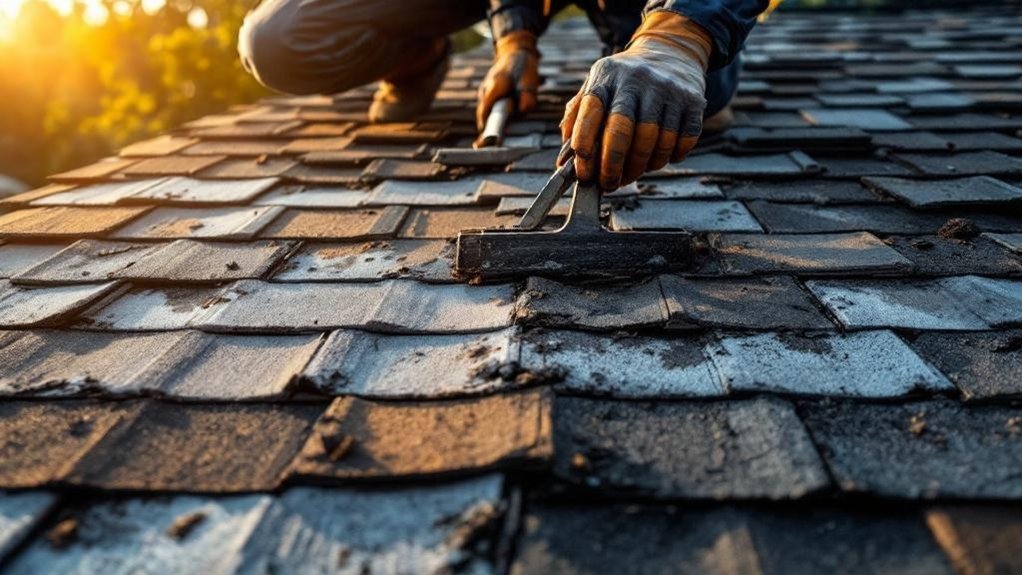
When evaluating your roofing needs, understanding the true costs of repairs provides essential context for making informed decisions. As industry professionals, we’ve observed repair costs typically ranging from $392 to $1,929 for most homeowners, with national averages hovering around $750 to $1,152 in 2025.
Your repair costs will vary considerably based on damage type and roofing material. Hail damage can run $600-$6,500+, while material-specific repairs range from $875 for asphalt shingles to $2,400 for concrete tiles. Several factors influence pricing: location, roof complexity, material availability, and labor rates. Metal roofing offers a longer-lasting alternative with durability benefits that can reduce long-term repair costs. Additionally, obtaining itemized estimates can help clarify the costs associated with materials and labor, ensuring you know exactly what to expect.
Smart budgeting strategies include planning for additional expenses like disposal fees and permits. Remember that frequent patchwork repairs may ultimately exceed replacement costs, especially considering today’s average replacement cost of $30,680 for asphalt roofs.
Signs Your Roof Needs Replacement vs. Simple Repairs
We’ve found that homeowners often struggle to determine when repairs suffice versus when replacement becomes necessary. Visual indicators like widespread granule loss, curling edges, or multiple leak points suggest replacement, while age factors—particularly asphalt shingles beyond 20 years—strongly influence this decision. Professional inspections can help identify hidden damage that may not be visible to the untrained eye. Neighbors’ roofing activities can provide valuable context, as homes in the same area built during similar timeframes typically experience comparable deterioration patterns. Weather-related damage assessment must consider both immediate impact and long-term consequences, as severe storm damage affecting large roof sections typically necessitates complete replacement rather than spot repairs.
Visual Warning Signs
Identifying the difference between a roof that needs simple repairs versus complete replacement starts with recognizing key visual indicators. At CRF Roofing & Restoration, we perform thorough shingle inspection to detect critical warning signs: missing, cracked, or curling shingles suggest moderate to severe deterioration, while buckling or blistering demands immediate attention.
We’re particularly concerned when we see widespread granule loss, exposing the vulnerable asphalt beneath. Advanced moisture detection reveals problems before they reach your interior—water stains on ceilings or walls indicate active leaks that shouldn’t be ignored. Understanding that most commercial roofs have a 20-30 year lifespan can help contextualize these visual symptoms against the age of your roofing system.
Structural deformation such as sagging surfaces or uneven roof lines signals serious framework issues requiring replacement rather than repair. Similarly, persistent moss growth or corrosion on metal components accelerates deterioration of your roofing system, often necessitating more than simple fixes.
Age-Based Decision Factors
The age of your roof serves as perhaps the most critical factor in determining whether repairs will suffice or if complete replacement is necessary. At CRF Roofing, we analyze roof lifespan benchmarks to guide your decision:
- Asphalt shingles (20-30 years)
- Metal roofing (40-70 years)
- Slate, tile, or copper (50+ years)
Your replacement timing may accelerate based on your region—12-15 years in hail-prone areas versus 25-30 years on the West Coast. Insurance considerations also impact this timeline, as many carriers begin limiting coverage at 15-20 years, with significant restrictions after just 10 years. With approximately 5 million residential roofs being replaced annually in the U.S., understanding your roof’s condition is essential.
Our professional assessment weighs repair costs against your roof’s remaining lifespan, helping you make an informed decision that protects both your home and investment.
Weather Damage Assessment
When severe weather strikes your home, the aftermath often reveals essential signs that determine whether your roof needs simple repairs or complete replacement. At CRF Roofing, we evaluate storm impact through specific visual indicators: missing shingles, granule loss, water stains, and damaged flashing.
Our damage evaluation follows clear thresholds—if more than 25-30% of your roof is compromised, replacement typically makes more sense than repairs. We look for structural warning signs: sagging sections, widespread hail damage, and water intrusion reaching interior spaces. Documenting the damage thoroughly with photos and videos will strengthen your insurance claim process.
Isolated issues like a few missing shingles can be repaired, but significant wind damage with multiple compromised areas suggests replacement is necessary. Our professional assessment goes beyond visible damage to examine underlying structural integrity, ensuring you make the most cost-effective, long-term decision for your home.
Material Considerations: How Your Roof Type Affects Decisions
At CRF Roofing and Restoration, we’ve found that material selection critically impacts the repair-versus-replacement equation through both lifespan expectations and economic factors. A slate roof’s century-plus longevity often justifies extensive repairs, while standard asphalt shingles with 15-30 year lifespans may warrant replacement at failure points. We’re committed to analyzing your specific roofing material’s cost-to-durability ratio to recommend the most value-driven solution for your property’s long-term protection. Additionally, our expert roof installation services ensure that any repairs or replacements adhere to the highest standards of craftsmanship. Metal roofing’s exceptional durability of 40 to 70 years makes it a strong candidate for repairs rather than full replacement when damage is localized.
Material Lifespan Analysis
Understanding your roof’s material lifespan greatly impacts the repair versus replacement decision-making process. At CRF Roofing, we evaluate material longevity when advising homeowners on their options:
Premium materials like slate (75-200 years) and copper (70+ years) justify replacement investments through decades of protection. Standing seam metal systems deliver 50-70+ years of reliable service, while architectural asphalt shingles typically last 25-30 years.
Installation quality notably affects these projections—proper techniques can extend your roof’s life by 5-10 years. Environmental factors also play an essential role: hot climates accelerate UV damage to asphalt, while coastal salt spray hastens metal corrosion. Northeast Ohio’s freeze-thaw cycles can significantly reduce the expected lifespan of certain roofing materials without proper maintenance.
We’ll help you weigh these factors against your home’s needs, ensuring you make a confident decision about repair versus replacement.
Cost-to-Durability Ratio
The material composition of your roof fundamentally shapes every repair versus replacement decision you’ll face as a homeowner. At CRF Roofing, we evaluate each project through a cost-to-durability ratio lens to maximize your investment.
Premium materials like slate ($15-30/sq.ft) deliver exceptional durability (75-200 years) with minimal maintenance, justifying higher upfront costs. Mid-range options such as concrete tiles ($7-10/sq.ft) offer balanced cost efficiency with 50-100 year lifespans. Meanwhile, budget-friendly asphalt shingles ($1-4/sq.ft) require more frequent replacement (15-30 years).
When comparing options, we consider not just initial investment but lifetime value. Metal roofing’s durability comparison reveals 40-70 years of performance at $5-12/sq.ft, often making it more economical long-term than repeatedly repairing lesser materials. Copper roofing stands out for its aesthetic appeal and longevity, though at premium pricing. We’ll help you navigate these considerations to find your ideal solution.
Age as a Key Factor in Roof Investment Choices
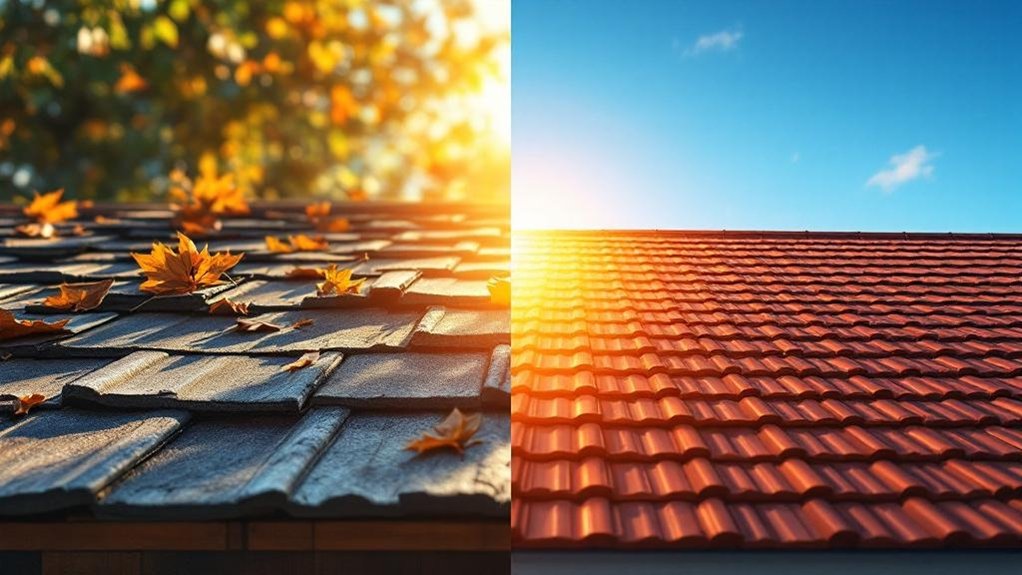
When determining whether to repair or replace your roof, age stands as perhaps the most critical factor in making a financially sound decision. We’ve found that asphalt shingles typically last 15-25 years, while metal roofs can serve you for 30-70 years, and slate options may protect your home for up to 200 years. As your roof approaches its expected roof lifespan, continued repairs often exceed replacement costs over time. Insurance companies recognize this reality, sometimes requiring replacement of older roofs to maintain coverage. Look for signs of wear including curling, cracking, or missing shingles that indicate replacement may be necessary. Regular inspections by professionals can help identify early warning signs of deterioration before they become significant issues.
Smart maintenance planning involves regular professional assessments to identify early warning signs like curling shingles, ceiling discoloration, or increased energy bills. Remember that Wisconsin’s harsh climate accelerates aging—roofs that might last 25 years elsewhere may need earlier replacement in our region.
Long-Term Value Analysis for Homeowners
How does your roofing investment impact your home’s long-term financial picture? When analyzing repair versus replacement, we consistently find replacement delivers superior investment longevity. While the initial outlay is higher ($15,159-$27,580 for a typical home), complete replacement eliminates recurring emergency repair costs that compound over time. Additionally, opting for energy-efficient roofing options can further reduce utility expenses and enhance overall savings.
New roofing systems provide measurable long-term savings through enhanced energy efficiency, reduced utility bills, and decreased maintenance expenses. Insurance benefits further strengthen the value proposition, with potential premium reductions and better coverage eligibility. A new roof installation can increase your property value by 15-40% compared to maintaining an aging roof.
Our analysis shows replacement roofs deliver significant property value enhancement—often recouping much of their cost at resale—while repairs offer minimal impact. For most homeowners facing extensive repairs approaching half the replacement cost, investing in a complete system proves more economical over its 20+ year lifespan.
Professional Assessment and Decision-Making Process
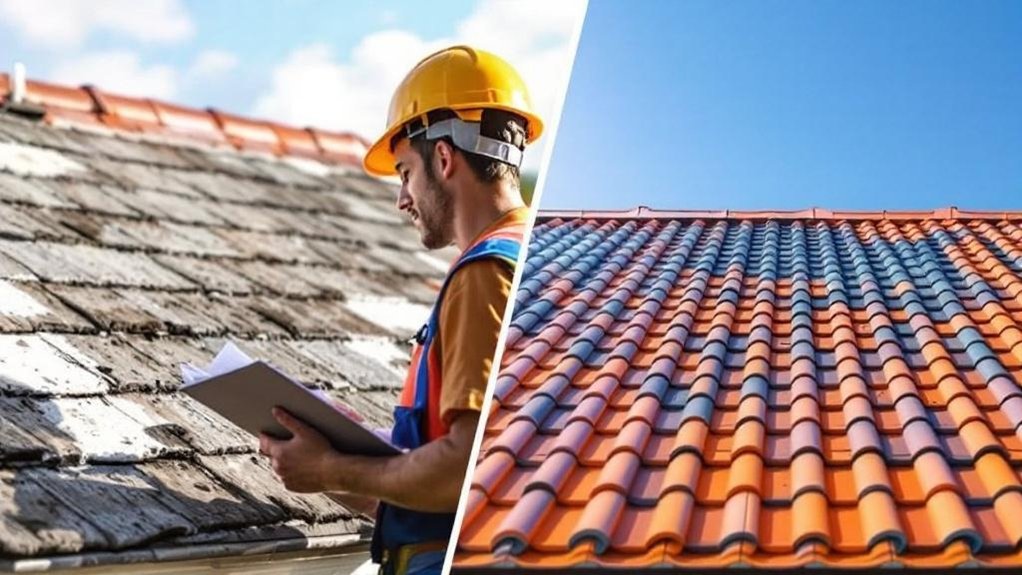
Before determining whether your roof needs repair or replacement, our certified inspectors conduct a thorough professional assessment designed to evaluate multiple critical factors. Our inspection protocols include a ground-level survey, detailed material assessment, structural integrity verification, and attic examination—all completed within 45-90 minutes for most homes.
We document everything with high-resolution photography and extensive checklists that examine roofing materials, flashing, drainage systems, and ventilation. Homeowner communication is central to our process; we’ll discuss your roof’s history during initial consultation and provide clear explanations of our findings afterward. We may also use thermal imaging technology to detect hidden moisture infiltration or insulation problems that aren’t visible to the naked eye. Regular inspections can help extend a commercial roof’s lifespan by identifying issues early on, which ultimately enhances the decision-making process for repairs or replacement.
This professional assessment forms the foundation for our recommendations, helping you understand whether repairs will suffice or if replacement offers better long-term value. We’ll guide you through priority issues and provide detailed cost estimates for informed decision-making.
Frequently Asked Questions
Will My Insurance Cover Partial Roof Replacement?
Most insurance policies cover partial roof replacement for sudden damage, but full replacement may be required if new materials can’t reasonably match your existing roof. We’ll help navigate your specific coverage options.
Can I Repair Just One Section of Different-Colored Shingles?
Yes, we can repair one section with different-colored shingles, but achieving perfect shingle aesthetics is challenging. We utilize specialized color matching techniques to minimize visual discrepancies for a more cohesive appearance.
How Do Warranties Differ Between Repairs and Full Replacements?
Full replacements typically include thorough warranty coverage with extended terms, while repairs often face warranty limitations, covering only the specific area worked on rather than your entire roofing system.
Should I Repair or Replace Before Selling My Home?
We recommend replacement if your roof condition greatly impacts appraisals or buyer financing. For minor issues, strategic repairs may suffice, as home selling decisions should balance investment return against market demands.
Can I Perform Temporary Emergency Repairs Myself?
Yes, you can apply temporary fixes like tarps and roofing cement for emergencies, but DIY solutions should only bridge the gap until we can provide professional, permanent repairs.
Conclusion
We’ve provided this guide to help you navigate the complex decision between roof repair and replacement. By evaluating damage severity, material considerations, age factors, and long-term value, you’ll be equipped to make an informed choice. Remember, we’re available to conduct professional assessments that consider your specific circumstances. Investing wisely today guarantees your home remains protected for years to come.