
Successfully negotiating with roofing insurance adjusters requires thorough preparation. We need to understand our policy coverage (RCV vs. ACV), document damage thoroughly with time-stamped photos from multiple angles, and prepare strategically before the adjuster’s visit. Working with qualified contractors strengthens our position, while maintaining calm, fact-based communication during negotiations. For complex claims, hiring a public adjuster can increase settlements by 574-747%. The following strategies will empower you to maximize your legitimate claim value.
Key Takeaways
- Thoroughly document all roof damage with time-stamped photos from multiple angles before the adjuster arrives.
- Prepare a comprehensive portfolio including policy documents, maintenance records, and professional inspection reports.
- Understand your policy coverage details, including RCV vs. ACV and any special endorsements or deductibles.
- Maintain calm, fact-based communication during the inspection and negotiation process.
- Consider hiring a public adjuster for complex claims, as they can increase settlements by 574-747%.
Understanding Your Insurance Policy Before Filing a Claim
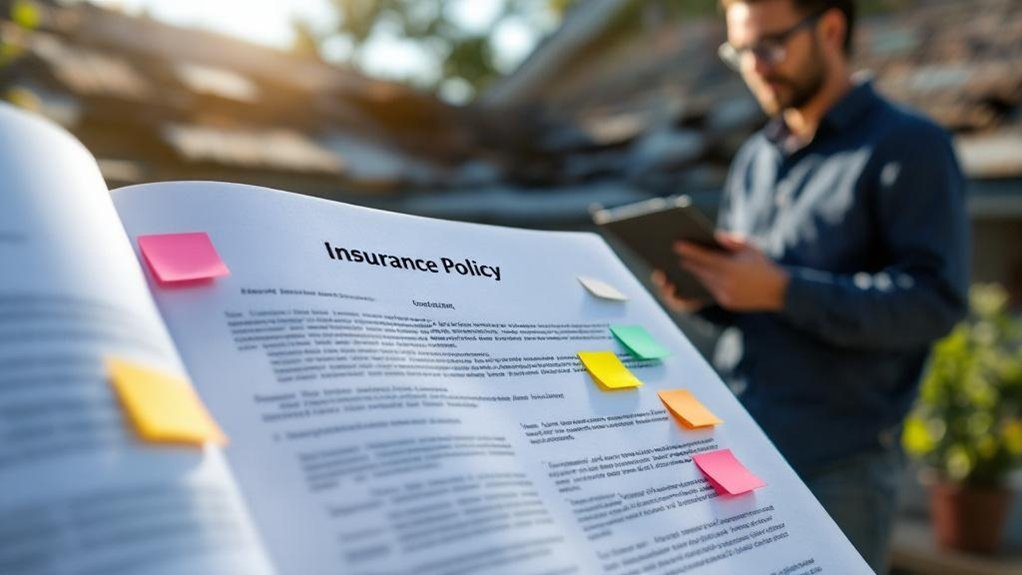
Before you even think about filing a roof damage claim, it’s essential that you thoroughly understand what your insurance policy actually covers. At CRF Roofing, we’ve seen countless homeowners surprised by policy terms they never realized existed until it was too late.
First, determine whether you have Replacement Cost Value (RCV) or Actual Cash Value (ACV) coverage. RCV pays for full replacement without depreciation, while ACV subtracts depreciation based on your roof’s age. For example, a 15-year-old roof with a 30-year lifespan faces 50% depreciation under ACV. Understanding the distinction between RCV and ACV is vital as it directly affects your insurance claim outcome.
Next, review your coverage limits and deductible structure. Many policies have separate wind and hail deductibles or percentage-based deductibles that can greatly impact your out-of-pocket costs. Remember, standard policies exclude wear and tear, poor maintenance, and sometimes cosmetic damage. Additionally, certain types of coverage, like matching endorsements, can be crucial if you need to replace only part of your roof while maintaining its overall appearance.
Documenting Roof Damage: What Adjusters Look For
When documenting roof damage for insurance claims, we’ll capture thorough pre-inspection photos of all visible issues before the adjuster arrives. We’re trained to identify hidden damage that adjusters often miss, including compromised underlayment, water infiltration paths, and structural weaknesses that aren’t immediately apparent. Our detailed documentation process creates a complete damage profile that supports your claim with evidence that meets insurance industry standards. Providing time-stamped photos of the damage significantly strengthens your case and helps validate the severity of the damage when negotiating with insurance adjusters. Additionally, our inspections follow specialized inspection protocols that ensure even concealed issues are identified and documented effectively.
Pre-Inspection Photo Evidence
Powerful visual evidence stands as your strongest ally when negotiating with insurance adjusters for roof damage claims. At CRF Roofing, we recommend creating a thorough pre-inspection checklist that includes before-and-after documentation of your roof’s condition.
Our photo documentation tips focus on capturing multiple angles: wide shots showing the full scope, close-ups of specific damage points, and aerial perspectives when possible. Time-stamped, high-quality images that clearly show torn shingles, punctures, and missing tiles make your case irrefutable. Providing time-stamped photos is essential for verification purposes and helps establish when the damage occurred.
Remember to document all affected areas—shingles, gutters, flashing, and interior damage from leaks. When paired with maintenance records, these photos create a compelling narrative that insurance adjusters can’t easily dismiss, ensuring you receive the coverage you deserve.
Hidden Damage Detection
While photo evidence creates a strong foundation for your claim, insurance adjusters are specifically trained to identify hidden damage that might escape an untrained eye. At CRF Roofing, we understand these detection techniques intimately.
Beyond visible missing shingles, adjusters search for subtle indicators: broken seals compromising waterproofing, lifted shingles that haven’t yet blown away, and granule loss patterns revealing hail impact intensity. They’ll examine puncture patterns from debris impacts and trace water infiltration pathways through your home’s structure. Having a roofing contractor present during the adjuster’s inspection can significantly improve your chances of getting all damage properly documented and included in your claim.
Most critically, we have found that over 85% of storm-related claims face initial underfunding because hidden damage goes undocumented. That’s why we accompany adjusters during inspections, pointing out compromised areas like moisture-affected structural components and impact damage on metal elements—ensuring nothing escapes assessment.
Preparing for the Adjuster’s Inspection Visit

At CRF Roofing, we’ve found that strategic preparation before an adjuster’s visit greatly increases claim approval rates and maximizes settlement amounts. We’ll help you control the narrative by creating thorough documentation packages that highlight all damage points from multiple angles, supported by maintenance records and policy-specific evidence. Our team works alongside you to gather compelling interior and exterior evidence, ensuring we’re present during the inspection to professionally address potential objections and reinforce your claim’s legitimacy. We recommend conducting a preliminary walk around assessment of your property to identify exterior damage before the adjuster arrives. Additionally, be aware that having a comprehensive understanding of insurance claims support can significantly strengthen your position during negotiations.
Strategic Pre-Inspection Preparation
Before an insurance adjuster sets foot on your property, strategic preparation can dramatically influence the outcome of your roofing claim. At CRF Roofing & Restoration, we’ve developed proven negotiation tactics that help homeowners maximize their settlements.
Start with our preparation checklist: thoroughly review your policy to understand coverage limits and deductibles, organize all maintenance records and previous repair documentation, and guarantee safe, clear access to damaged areas. We recommend taking detailed notes on critical policy points and preparing specific questions about the assessment process. Be sure to clearly express your intent to file a claim when you first contact your insurance company.
As your trusted local experts, we’ll help you navigate this process with confidence. Remember, timing matters—notify your insurance company immediately after discovering damage, and maintain proactive communication throughout the claims process.
Documentation Powers Negotiations
When insurance adjusters arrive to evaluate your roof damage, proper documentation will serve as your most powerful negotiation tool. At CRF Roofing & Restoration, we’ve seen how organized evidence presentation transforms claim outcomes.
We recommend assembling a thorough portfolio including policy documents, before-and-after photos with timestamps, professional inspection reports, official weather data, and receipts for temporary repairs. Your photo documentation should capture specific damage points—missing shingles, granule loss, and interior water damage—all with clear timestamps.
Prepare both digital and physical copies of your documentation package for the adjuster’s convenience. This organization demonstrates your preparedness and strengthens your position during negotiations. Adjusters will use their assessment skills to estimate the damage accurately, which makes your detailed evidence crucial for fair compensation. Remember, adjusters base their assessments on visible evidence, so thorough documentation provides the leverage needed when insurance companies offer settlements below the full restoration costs your home deserves.
Control The Narrative
Successfully controlling the narrative during your insurance adjuster’s visit requires thorough preparation that begins long before they arrive at your property. We recommend arranging a pre-adjuster professional assessment to establish baseline damage documentation, giving you a critical advantage in narrative control.
Review your policy thoroughly, noting coverage details and exclusions so you can speak confidently about your entitlements. Take clear date-stamped photos from multiple angles to provide irrefutable evidence of the damage extent and timeline. Organize all documentation—photos, inspection reports, and maintenance records—in an easily accessible format for immediate reference during discussions.
Coordinate with us to guarantee we’re present during the adjuster’s visit. Our expertise helps direct the adjuster’s attention to vulnerable areas like skylights, chimneys, and roof valleys. This adjuster psychology works in your favor, as they’re more likely to recognize legitimate damage when guided by professionals who understand exactly what they’re looking for.
Effective Communication Strategies That Get Results

Effective communication with insurance adjusters serves as the foundation for successful roofing claim negotiations. At CRF Roofing, we’ve found that effective listening creates opportunities to understand the adjuster’s position, while persuasive questioning helps clarify coverage details and assessment rationale.
Always document every interaction in writing—request email confirmations of phone discussions and maintain thorough records of all correspondence. Reviewing your policy thoroughly before any conversations allows you to be prepared to discuss specific coverage points, including fire and water damage restoration that may apply to your claim.
Demonstrating emotional intelligence during negotiations helps establish rapport and creates a more collaborative claims process. Remember to stay professional even when frustrated. First impressions matter greatly, as they set the tone for your entire claim process. Avoid recorded statements without proper consultation, and never speculate about damage causes. Instead, stick to verifiable facts and create a consistent, well-documented narrative that supports your legitimate claim.
Working With Independent Contractors to Support Your Case
Partnering with qualified independent contractors provides essential leverage when negotiating with insurance adjusters for your roofing claim. At CRF Roofing, we guarantee all our documentation—including certificates of insurance with proper liability coverage and workers’ compensation—is meticulously prepared to support your case. Our contractor qualifications include specialized training in insurance claim procedures and adjuster interactions. When we assess damage, we create detailed documentation that directly addresses covered perils, helping establish the full scope of necessary repairs. We thoroughly document roof damage with comprehensive photos from multiple angles, ensuring every issue is visibly evident to adjusters reviewing your claim. Additionally, we emphasize the importance of regular inspections to demonstrate ongoing maintenance, which can further substantiate your claim.
The legal protections we offer extend beyond quality workmanship. As your advocates, we communicate urgent repair needs, interpret policy language, and provide professional estimates that adjusters respect. Our Owens Corning Preferred Contractor status adds credibility to your claim, guaranteeing adjusters take our assessments seriously during negotiations.
Recognizing and Countering Common Adjuster Tactics
While having strong contractor support strengthens your position, insurance adjusters often employ specific tactics designed to minimize payouts on legitimate claims. At CRF Roofing, we’ve witnessed these strategies firsthand, including deliberate delays in processing, excessive documentation requests, and exploitation of policy loopholes leading to claim denial. Our commitment to quality control measures ensures that we remain vigilant in these situations.
Be alert to adjusters who suddenly stop returning calls, demand decades-old repair records, or make verbal promises they later contradict. These adjuster manipulation techniques aim to wear down your resolve until you accept an inadequate settlement. Many adjusters will attempt to trick you into admitting partial fault by asking leading questions that can later be used to reduce your compensation. By partnering with a trusted contractor like us, you can enhance your ability to navigate these challenges effectively.
When faced with these tactics, maintain detailed records of all communications, request everything in writing, and don’t hesitate to involve us as your advocate. Remember, you’re not alone in this process—we’re here to help counter these strategies and secure the fair settlement your property deserves.
When and How to Challenge a Low Settlement Offer
When insurance companies present a settlement offer that falls short of covering your actual roof damage, knowing exactly when and how to challenge it can make the difference between a partial repair and complete restoration. At CRF Roofing, we recommend gathering thorough documentation before initiating any challenge—photographs, videos, and detailed descriptions create a solid foundation for your case. Additionally, consider including the expertise of professional roofing services to further substantiate your claim.
Don’t face low offer strategies alone. Arm yourself with multiple professional assessments and understand your policy’s exact terms. Our most successful clients employ strategic negotiation tactics: maintaining calm, fact-based communication while being prepared to escalate when necessary. Reviewing your policy carefully helps identify coverage limits that the adjuster must honor. Remember to leverage state matching laws and consider hiring a public adjuster for complex claims. With proper preparation and persistence, you can overcome inadequate settlement offers.
The Appeal Process: Taking Your Claim to the Next Level
If your initial roof damage claim has been denied or considerably underpaid, the insurance appeal process offers a vital second opportunity to secure the coverage you deserve. We recognize the frustration when adjusters miss significant damage during their evaluation. Additionally, we can assist you in gathering roofing installation estimates from our experts to support your appeal.
Your appeal eligibility depends on specific timeframes that vary by insurer and state, so we will help determine your deadline before proceeding. Evidence gathering forms the foundation of a successful appeal—we will document everything with photos, videos, detailed incident reports, and professional estimates. We also recommend obtaining witness statements to strengthen your case with additional perspectives on the damage event.
When crafting your appeal letter, we will reference your policy language, include your claim number, clearly state the desired outcome, and send it via certified mail. Having our roofing experts present during reinspections guarantees adjusters don’t overlook damage that rightfully deserves coverage.
Hiring Public Adjusters: When Expert Help Becomes Necessary
Sometimes the most powerful addition to your insurance claim team isn’t your contractor or attorney—it’s a licensed public adjuster. At CRF Roofing, we’ve seen the remarkable difference expert representation can make, especially for catastrophic roof damage claims.
The public adjuster benefits are striking—studies show settlements increase by 574-747% with professional advocacy. These specialists understand policy language, document damage thoroughly, and negotiate skillfully against insurance tactics designed to minimize payouts.
Though they typically charge 5-15% of your settlement, their contingency fee structure means you pay nothing unless they succeed. For complex claims, large-scale damage, or when initial offers seem insufficient, a public adjuster’s specialized knowledge often results in settlements 2-3 times higher than unrepresented claims—even after their fees. This expertise is particularly valuable considering public adjusters represented 39% of catastrophe claims during the 2008-2009 period analyzed by OPPAGA.
Frequently Asked Questions
Can I Choose Any Contractor or Must I Use Insurance-Recommended Ones?
You can choose any contractor you prefer. Despite insurance company stipulations, we recognize your legal right to contractor flexibility. We’ll help you navigate this process while ensuring your interests remain protected.
How Long Do I Have to File a Roof Damage Claim?
Most policies allow 30-365 days to file roof damage claims, though we’ve seen requirements as short as 48 hours for water damage. We’ll help you navigate these claim deadlines throughout your filing process.
Will Filing a Roof Claim Increase My Insurance Premiums?
While filing a roof claim may impact your premiums, the increase isn’t guaranteed. We’ve seen first-time claims typically raise rates 7-10%, but factors like claim history and location influence the actual premium change.
Can Adjusters Deny Claims Based on Improper Roof Maintenance?
Yes, adjusters can deny claims for lack of roof maintenance. We’ve seen denials when neglect contributed to damage. We’ll help you document your maintenance efforts to strengthen your claim position.
Is It Better to Accept Cash Settlements or Direct Repair Payments?
While cash settlements offer flexibility, we typically recommend direct payments for immediate protection and quality repairs. We’ll help you navigate either option to maximize your claim’s value and protect your home.
Conclusion
We’ve seen firsthand that successful insurance negotiations aren’t about confrontation, but strategic advocacy. By understanding your policy, documenting thoroughly, communicating effectively, and knowing when to challenge assessments, you’ll maximize your legitimate claim. Remember, you’re entitled to fair compensation for proper roof restoration. If you’re feeling overwhelmed, we’re here to guide you through every step of this process with our proven expertise.