
We should watch for blistering, cracking shingles, sagging roof lines, and water stains as early indicators of commercial roof damage. Interior signs include ceiling discoloration, musty odors, and wall streaks. Don’t overlook drainage issues like clogged gutters or standing water that persists beyond 48 hours. Regular spring and fall inspections help document problems before they escalate. Additional warning signs await those seeking to protect their commercial investments.
Key Takeaways
- Surface blisters, cracks, and curling shingles indicate weathering damage and potential water penetration in commercial roofs.
- Water stains on ceilings and near walls suggest active leaks and moisture infiltration before visible dripping occurs.
- Overflowing gutters, clogged downspouts, and standing water for over 48 hours indicate serious drainage system failures.
- Sagging roof lines, soft spots in the roof deck, and misaligned doors signal compromised structural integrity.
- Regular biannual inspections with monthly visual checks help identify problems before they cause extensive damage.
Visual Signs of Roof Deterioration
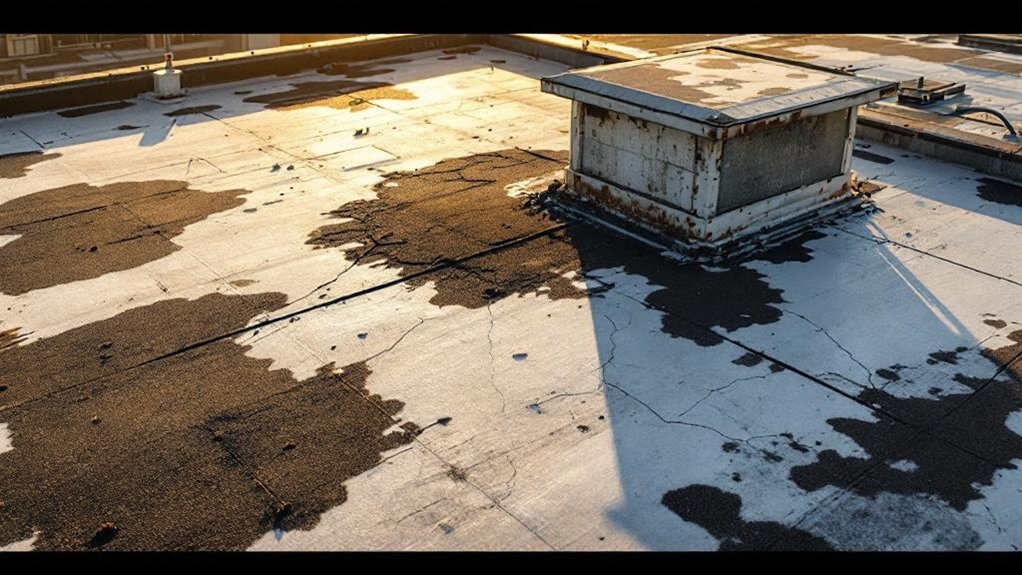
How do experienced professionals identify commercial roof issues before they become catastrophic failures? At CRF Roofing and Restoration, we look for telltale indicators during our inspections. Surface blisters and bubbles signal trapped moisture within roofing layers, while cracks indicate weathering damage that allows water penetration. For commercial properties, regular roofing services play a crucial role in preventing small issues from escalating into major structural failures.
Pay special attention to curling shingles—these deformations result from temperature fluctuations and humidity changes, creating vulnerable entry points for water. Blistering paint on interior surfaces often reveals moisture issues originating from roof problems. We also examine for visible sagging or uneven roof lines, clear signs of structural compromise requiring immediate attention. After severe weather events, we thoroughly inspect damaged flashing around vents, chimneys, and roof transitions as it significantly increases water infiltration risks.
As your trusted Owens Corning Preferred Contractor, we’re trained to spot these early warning signs before they evolve into extensive damage, protecting your investment while maintaining the integrity of your commercial property.
Water Infiltration and Interior Damage Patterns
When water breaches your commercial roof system, it leaves distinct patterns of damage that serve as diagnostic indicators for experienced professionals. At CRF Roofing & Restoration, our water stain analysis reveals telltale brown or yellow discoloration on ceilings, often the first sign before active leaking occurs.
We’re particularly concerned when these stains appear near walls, as this suggests moisture penetration into structural elements. Advanced moisture detection techniques, including infrared scanning, help us identify trapped water in roofing layers before visible damage manifests. If you notice water dripping from ceilings or active leaks, this may signal more urgent roof damage, and immediate inspection is recommended.
Persistent musty odors and mold growth indicate chronic moisture issues that require immediate attention. Similarly, interior damage beneath areas of pooling water points to drainage problems or flashing failures around roof penetrations. The presence of consistent standing water can cause membrane breakdown and eventually lead to structural strain that compromises the entire roofing system. By addressing these indicators promptly, we protect your investment and prevent costly structural deterioration.
Energy Efficiency Red Flags in Commercial Roofing
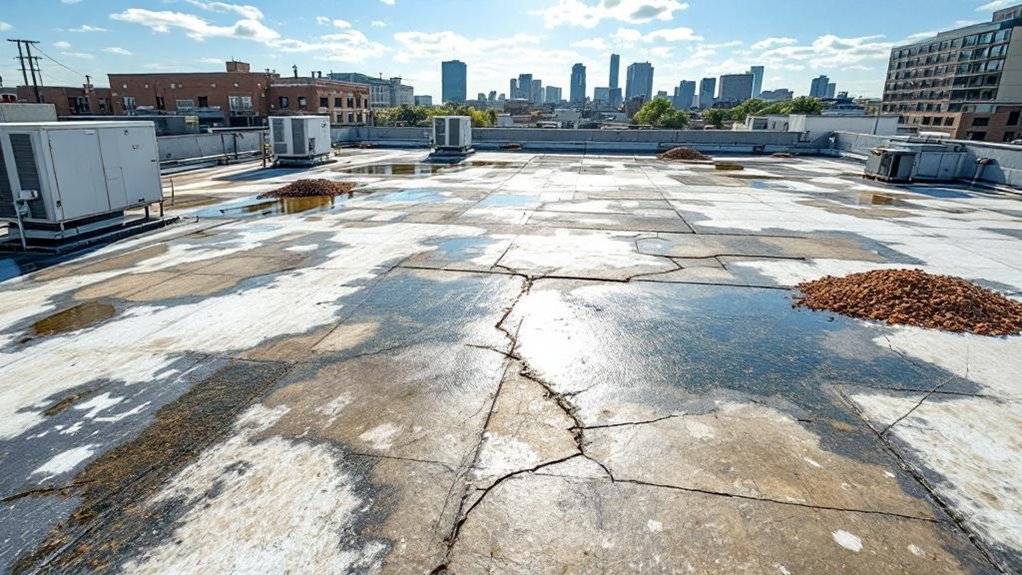
Identifying energy efficiency red flags in commercial roofing requires systematic evaluation of multiple performance indicators that directly impact building operation costs. We find that dark-colored roofing materials with low Solar Reflectance (SR) values consistently absorb excessive solar heat, driving up cooling expenses. Deteriorating thermal emittance (TE) properties trap heat on roof surfaces, compromising overall energy performance. When we inspect commercial roofs, we look for inadequate insulation with substandard R-values that fail to meet local building code requirements. Surface degradation from dirt accumulation or weathering greatly reduces reflectance properties over time. SRI values typically range from 0-100, with higher numbers indicating better energy performance for cooling. To maximize building efficiency and extend roof lifespan, regular maintenance programs deliver a smart investment by systematically addressing these issues before they escalate. Properly maintained roofing materials should demonstrate acceptable SRI (Solar Reflectance Index) ratings of 64+ to guarantee compliance with current energy standards. Regular cleaning and coating renewal are essential to maintain these critical energy efficiency metrics.
Critical Drainage System Warning Signs
We’re seeing an alarming increase in commercial roof failures due to malfunctioning gutters that overflow during heavy rainfall, causing water to infiltrate building envelopes. Our technical inspections frequently reveal clogged downspouts, improperly sized gutters, and disconnected drainage components that prevent proper water evacuation from roof surfaces. Regional expertise is crucial for identifying how local weather patterns and building types in Southern Indiana can accelerate drainage system deterioration if not addressed with tailored solutions. Standing water that remains for more than 48 hours indicates ponding water issues that require immediate attention. To prevent costly backups, we recommend installing gutter guards, scheduling quarterly cleaning maintenance, and implementing emergency overflow scuppers that provide secondary drainage when primary systems reach capacity.
Gutter Malfunction Indicators
Commercial roofing systems rely heavily on functional gutters to direct water away from the structure, making early detection of drainage system failures essential for preventing costly damage. We regularly observe several key malfunction indicators that warrant immediate attention: visible cracks, rust, or sagging sections; water overflow during rainfall; and accumulation of puddles near foundations. Neglected gutters often lead to expensive foundation repairs that could have been prevented with proper maintenance.
When we inspect your commercial property, we’ll identify structural concerns like failing mounting hardware and fascia damage that often accompany compromised gutters. Environmental factors—including harsh weather conditions and debris buildup—can accelerate deterioration, especially during freeze-thaw cycles.
Through our seasonal maintenance tips, we can help preserve your system’s integrity, while providing gutter replacement options when repairs aren’t sufficient. At CRF Roofing, we’re committed to protecting your investment with drainage solutions that perform reliably year-round.
Backup Prevention Measures
Early detection of drainage system warning signs forms the cornerstone of our backup prevention approach for commercial roofing. At CRF Roofing & Restoration, we implement thorough backup mitigation strategies by monitoring critical indicators: ponding water that persists beyond 72 hours, vegetation near drains, and the presence of algae or fungus on roof surfaces.
Our drainage system optimization process includes addressing visible wall streaks and surface cracking before they escalate into structural complications. We’re vigilant about inspecting for odors of mildew, discoloration, and ceiling leaks—all telltale signs requiring immediate intervention. Overflowing gutters and water stains around scuppers are warning signs that indicate potentially serious drainage issues requiring prompt attention.
As your trusted Owens Corning Preferred Contractor, we conduct scheduled inspections to identify drainage design flaws, ensuring clogs are cleared, low spots are addressed, and roof pitch adjustments are made when necessary to prevent potentially catastrophic backup damage.
Structural Integrity Concerns to Monitor
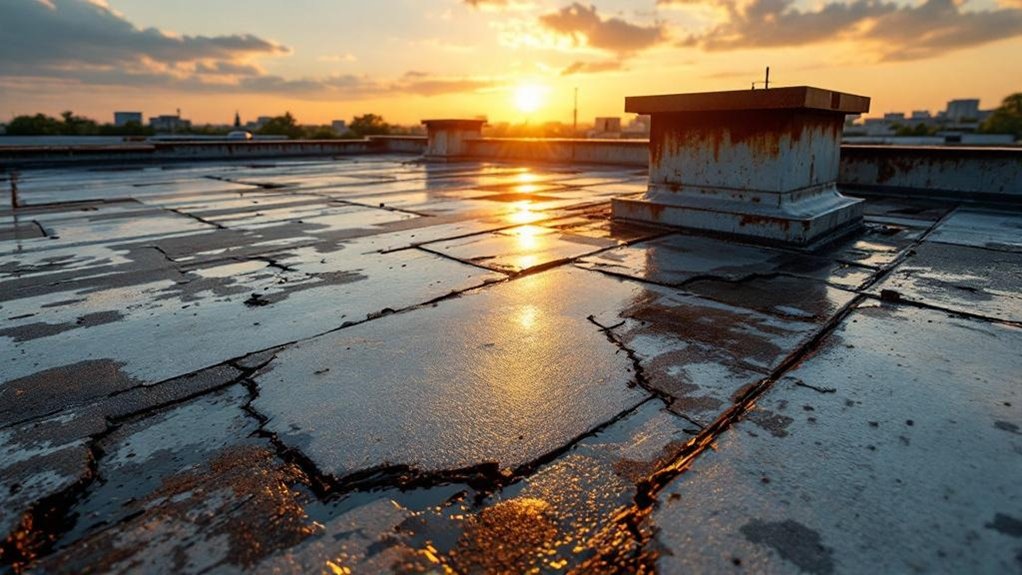
Monitoring the structural integrity of commercial roofing systems requires vigilant attention to key indicators that signal potential problems before they escalate into costly failures. At CRF Roofing and Restoration, we regularly inspect for visible sagging, deflection, and compromised load capacity—all warning signs that your roof’s structural elements may be failing.
We’re particularly attentive to flashing failures around penetration points, as these represent vulnerable areas where water intrusion commonly begins. Additionally, we look for soft spots in the roof deck, misaligned doors and windows, and water stains that suggest underlying structural issues. Detailed inspection reports and professional documentation are also essential for cataloging damage and supporting insurance claims. Regular assessments can identify thermal expansion stress that may compromise roofing components during temperature fluctuations.
Our thorough inspection protocols include infrared scanning and core sampling to detect hidden moisture that could be compromising your roof’s integrity. Through early detection, we help protect your investment and make certain your building remains safe and sound.
Post-Weather Event Inspection Priorities
After severe weather events strike, immediate inspection of commercial roofing becomes critical to prevent minor damage from escalating into major structural failures. Our maintenance checklists prioritize five key areas: visible surface damage, drainage functionality, material condition, flashing integrity, and interior indicators. We recommend examining for lifted shingles, punctures, and debris accumulation that could compromise the roof’s protective barrier. Proper water management requires thorough evaluation of gutters, downspouts, and drainage components for blockages or damage. Material assessment should include checking for granule loss, blistering, and secure fastening. It’s wise to choose industry-certified techniques for all repair and installation work to ensure best results and lasting resilience. During seasonal inspections, pay particular attention to all flashing and sealants, as these are primary entry points for moisture. Flood tests can effectively locate hidden leaks when visual inspections are inconclusive. Don’t overlook interior signs like water stains or structural deformation—these often reveal problems before they become catastrophic.
Preventive Maintenance Scheduling Best Practices
Implementing an effective preventive maintenance schedule stands as the cornerstone of commercial roof longevity and performance. At CRF Roofing, we recommend biannual inspections (spring and fall) supplemented by monthly visual checks to identify early damage indicators. A structured maintenance calendar should document all activities—from debris clearing to gutter cleaning—with assigned responsibilities and completion tracking. We’ve found that detailed record-keeping enables trend analysis and informed decision-making for future repairs. Drawing from our experience in timely project completion, staying on schedule with your inspections maximizes protection and helps avoid unexpected disruptions.
For thorough protection, schedule additional routine inspections following severe weather events, as hidden damage often appears weeks later. This proactive approach can extend roof lifespan by 30-100%, resulting in significant long-term savings. Regular cleaning of drainage systems prevents costly water damage, while immediate attention to minor repairs prevents escalation into major issues.
When to Call for Emergency Roof Repairs
Recognizing emergency roof conditions requires immediate action to prevent catastrophic damage to commercial properties. At CRF Roofing & Restoration, we prioritize emergency response when active leaks show visible dripping, water stains appear on ceiling tiles, or you hear persistent dripping noises.
Structural indicators demanding repair urgency include large membrane tears exceeding 2 inches, missing roofing sections after storms, and roof deck deflections observed internally. As part of our proven roofing installation process, we ensure that every assessment is carried out by certified professionals adhering to high safety standards. Fallen trees or branches causing visible damage represent significant structural threats that require immediate professional assessment. We immediately address interior warning signs like newly forming wall cracks, sagging ceiling tiles, and doors that suddenly won’t close properly.
Commercial properties face critical liability when ponding water remains for over 48 hours, membrane blistering occurs, or “alligatoring” patterns develop. As your trusted neighbors, we’re committed to rapid intervention that protects your property and prevents costly escalations.
Frequently Asked Questions
How Does Roof Warranty Coverage Change With Commercial Building Modifications?
We’ve found that commercial building modifications can void warranty coverage if unauthorized. Modification impacts include limited coverage for penetrations and equipment additions. Always secure manufacturer approval before making changes to maintain protection.
Can Roof Damage Affect Indoor Air Quality for Employees?
Yes, roof damage directly impacts your indoor air quality. We’ve seen how leaks raise humidity levels, promoting mold growth that releases harmful air pollutants throughout your workspace, affecting everyone’s respiratory health.
What Roofing Materials Offer the Best ROI for Commercial Buildings?
We recommend PVC as the best commercial ROI, combining exceptional durability with energy savings. TPO offers balanced performance, while metal roofs provide long-term value through minimal maintenance and 40+ year lifespans. Durable membranes consistently outperform traditional options.
How Do Solar Panel Installations Impact Commercial Roof Integrity?
Solar panel installations require professional structural assessments to guarantee your commercial roof can bear the added load. We’ll evaluate weight distribution, mounting systems, and existing conditions to maximize solar installation benefits while preserving roof integrity.
Are Infrared Drone Inspections Worth the Investment for Large Facilities?
We’ve found infrared drone technology delivers exceptional ROI for large facilities, combining enhanced inspection accuracy with safety benefits, efficiency gains, and early detection capabilities that greatly reduce long-term maintenance costs.
Conclusion
We’ve outlined the critical indicators that signal potential roof damage across visual, water-related, energy efficiency, drainage, structural, and weather-impact categories. By systematically monitoring these warning signs and implementing our recommended maintenance schedule, you’ll maximize your commercial roof’s lifespan. When these indicators appear, don’t hesitate to contact certified professionals immediately. Prompt intervention will greatly reduce repair costs and prevent operational disruptions to your business.