
After storm damage, we’ll immediately secure our safety by turning off utilities and avoiding climbing damaged roofs. We’ll document the damage with timestamped photos from multiple angles for insurance claims. Next, we’ll apply temporary repairs using UV-resistant tarps and roofing cement to prevent further water intrusion. Contacting a qualified contractor with proper credentials is essential before filing our insurance claim. The following steps will guide you through this challenging process.
Key Takeaways
- Turn off all utilities to prevent additional hazards and conduct a ground-level visual assessment of roof damage.
- Document damage with timestamped photos from multiple angles and gather weather reports for insurance claims.
- Apply emergency repairs using professional-grade tarps and roofing cement on lifted shingles if safe to do so.
- Contact your insurance company immediately and understand your policy’s coverage type (ACV vs. RCV).
- Verify contractor qualifications, licensing, and insurance before hiring for permanent repairs.
Safety First: Securing Your Property After a Storm
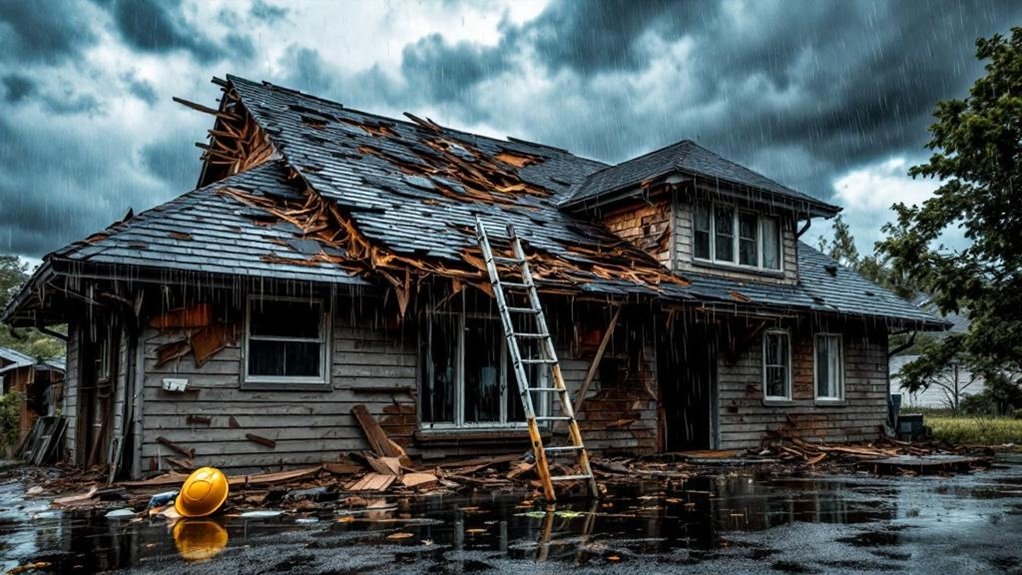
When the skies clear after a severe storm, your first priority isn’t roof repairs—it’s ensuring everyone’s safety. We recommend following these immediate actions to protect your family and property.
Start with a thorough safety protocol by turning off utilities—gas, water, and electricity—to prevent additional hazards. Conduct a ground-level visual assessment, using binoculars to examine roof damage from a safe distance. Look carefully for any circular dent patterns that might indicate significant hail damage to your shingles. Never climb on potentially unstable structures. Additionally, if you notice any visible missing shingles or flashing after a storm, it’s crucial to call for emergency roofing services to minimize further damage.
Secure your property by boarding up damaged windows and doors, and install temporary barriers around the perimeter. Cover exposed areas with tarps to prevent further water intrusion. Don’t forget to check for less obvious dangers like leaning trees, compromised decks, or water-damaged ceilings.
Identifying Common Types of Roof Storm Damage
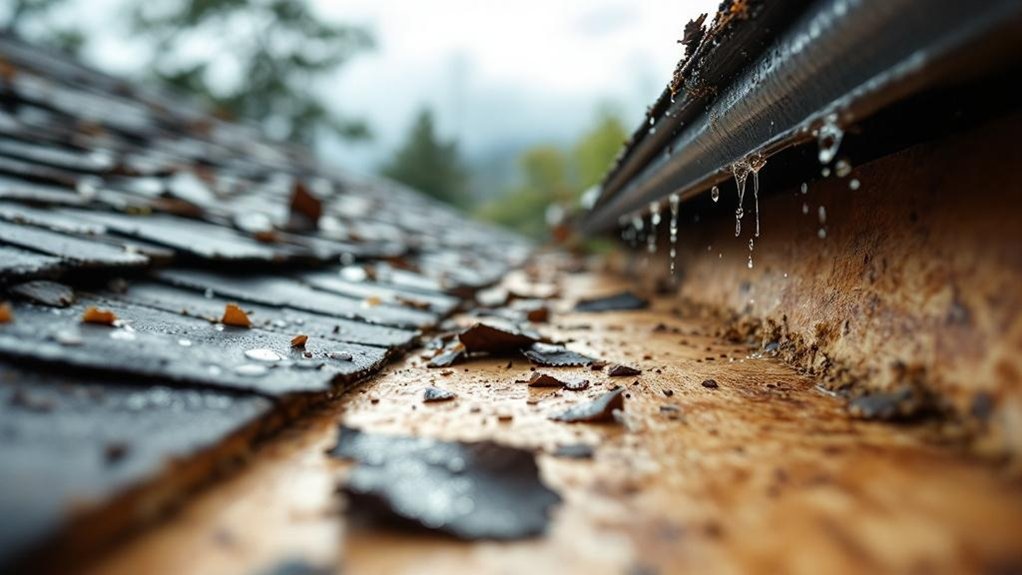
We’ve seen countless homeowners overlook telltale signs of storm damage, particularly wind-torn shingle patterns and hail impact markers. Wind damage often presents as missing, lifted, or curled shingles with exposed roof deck, while hail typically leaves distinct circular impacts and granule loss on asphalt surfaces. Recognizing these damage patterns promptly can prevent water intrusion and more costly structural repairs down the line. After significant storms, it’s crucial to check for dark spots on asphalt shingles as they are a clear indication of hail damage that requires immediate attention. Additionally, understanding that microscopic granule loss can affect waterproofing is essential for maintaining roof integrity.
Wind-Torn Shingle Patterns
The aftermath of severe storms reveals distinct wind-torn shingle patterns that experienced roofing professionals can identify during inspection. At CRF, we recognize how wind damage creates characteristic creases near the top portion of shingle tabs from repeated lifting motions, particularly along roof edges and windward sides.
We frequently observe missing or displaced shingles scattered across yards—a clear indication of severe wind impact. These gaps expose underlying materials to moisture infiltration, potentially leading to deck rot. The lifting and flapping motion weakens attachment points, creating unsealed areas even when shingles remain partially attached.
When we inspect your roof, we look for tear patterns through fastener locations and puncture damage from wind-blown debris. Straight line winds exceeding 100 mph can cause severe structural damage beyond simple shingle displacement. These distinct shingle displacement patterns help us determine the extent of storm damage and develop appropriate restoration solutions.
Hail Impact Markers
Hail impact markers leave distinctive evidence that our trained inspectors can easily identify during post-storm roof assessments. We look for circular bruises with dark spots where granules have been knocked loose, and round depressions with shiny centers exposing the asphalt layer beneath.
During hailstone identification, we distinguish between fresh damage (with sharp, clean edges) and older impact sites that appear weathered. We’ll run our hands over your shingles to detect soft spots or indentations. The damage severity is determined by examining structural compromises like cracks, splits, or tears that penetrate protective layers.
We’ll also check for secondary indicators—dented gutters, displaced shingles, and water stains on interior ceilings—all signs that your roof’s integrity may be compromised. Be especially concerned if you notice piles of granules in your gutters as this indicates significant shingle damage requiring immediate attention. As your neighbors, we’re committed to thorough assessment and honest solutions.
Documenting Damage for Insurance Claims
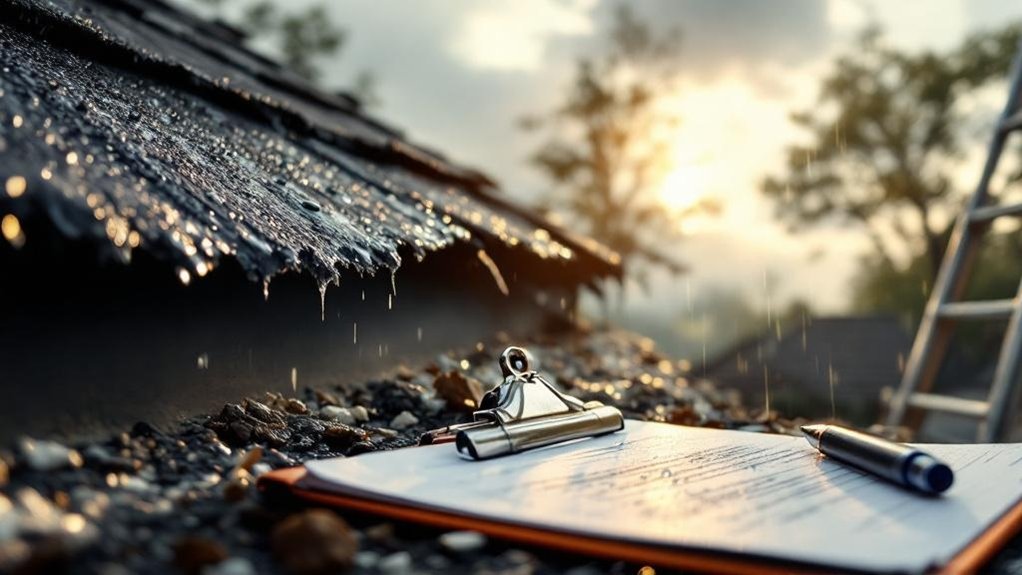
When catastrophic storms strike your property, proper documentation becomes your most powerful tool for securing fair compensation from insurance providers. At CRF, we’ve seen how thorough claim submission can make all the difference.
Start by gathering weather service reports confirming wind speeds over 50 mph or hail exceeding 1 inch. Take timestamped photos from multiple angles, capturing both close-ups of damage and wider contextual shots. Document interior water stains and attic conditions.
Our documentation tips: maintain a written log of all observations within 24 hours of the storm, secure professional inspection reports that clearly differentiate storm damage from normal wear, and collect any emergency repair receipts. Consider using thermal imaging technology to detect hidden moisture damage not visible to the naked eye. Remember to include neighbor testimonials and area damage documentation for additional validation—we’re all in this together when storms affect our community. Additionally, obtaining itemized roofing estimates can provide essential details for your claim and help clarify costs for repairs.
Emergency Temporary Repairs to Prevent Further Damage
After severe storms damage your roof, implementing emergency temporary repairs becomes essential to prevent water infiltration and structural deterioration. At CRF Roofing, we use professional-grade, UV-resistant tarps—never standard plastic sheeting—for proper tarp installation that overlaps the ridge line and secures all edges to prevent wind damage. Additionally, our team adheres to industry-certified techniques to ensure reliable and effective repairs.
We apply emergency flashing to damaged roof-wall intersections and chimneys, focusing on essential junction points most vulnerable to leaks. For lifted shingles, we use roofing cement to temporarily reseal them while replacing missing ones with temporary installations.
Before attempting any repairs, we conduct thorough safety assessments and moisture control measures, including attic inspections using moisture meters. Small leaks left unaddressed can quickly lead to mold and insulation damage throughout your home. Remember, never climb onto a damaged roof—instead, wait for our professionals to safely implement these essential protective measures.
Choosing a Qualified Roofing Contractor for Inspection
Selecting a qualified roofing contractor constitutes perhaps the most crucial decision you’ll make following storm damage to your roof. At CRF Roofing, we suggest verifying contractor qualifications through multiple channels.
First, confirm the contractor maintains a permanent business location and possesses valid licensing. Licensing verification can be done through your state’s administrative offices—always request proof of these credentials. Consider reviewing their professional affiliations to verify their commitment to industry standards. Additionally, ensure that the contractor is familiar with energy-efficient roofing options that can improve insulation and meet local building codes.
Next, make certain they carry adequate insurance coverage (minimum $1,000,000 liability and workers’ compensation). We’ve seen too many homeowners face financial hardship when working with underinsured contractors.
Finally, evaluate their track record by checking references, BBB ratings, and industry certifications. As Owens Corning Preferred Contractors ourselves, we recognize the importance of proper credentials that demonstrate commitment to quality, safety, and professional standards.
Understanding Your Insurance Coverage for Storm Damage
We’ll help you understand how your insurance policy specifically covers storm damage, starting with the critical difference between Actual Cash Value and Replacement Cost Value coverage types. Your policy’s deductible requirements must be clearly understood before filing, as this represents your financial responsibility before insurance benefits activate. Thorough documentation of all storm damage through photos and videos prior to repairs is essential for maximizing your claim’s potential success with your insurance carrier. Common storm-related issues like roof leaks from wind or hail damage are typically covered by standard homeowners insurance policies. Additionally, it’s crucial to consult with certified commercial roofers who can provide expert inspections to ensure all damage is accurately reported for your claim.
Coverage Types Matter
When storms ravage your property, understanding the specific types of insurance coverage you have can make the difference between financial devastation and full recovery. Standard homeowners policies typically include dwelling coverage for your roof, siding, and windows damaged by wind events, while personal property protection covers your belongings inside.
Don’t overlook additional structures coverage for detached garages or sheds, and loss of use benefits that pay for temporary housing during repairs. Be aware of coverage limits during the claim process, as water damage is only covered when wind creates an entry point—not from flooding, which requires separate insurance. Remember that wind damage from tornadoes, hurricanes, and hailstorms is typically covered regardless of storm intensity, though some states impose special deductibles for certain events. Always document all damaged items thoroughly with photos and detailed descriptions to ensure you receive accurate compensation when filing your claim.
Policy Deductible Basics
Insurance deductibles form the foundation of your financial responsibility when storm damage strikes your roof and property. As homeowners, we need to understand the different deductible types that might apply to storm scenarios.
Standard AOP deductibles differ markedly from specialized wind/hail or named storm deductibles. The latter typically work on percentage calculations—usually 1% to 5% of your home’s insured value—rather than flat dollar amounts. For example, a 2% wind/hail deductible on a $300,000 home means you’re responsible for $6,000 before insurance covers the rest.
Your geographic location greatly influences which deductibles appear in your policy. Midwestern homes often face wind/hail provisions, while coastal properties typically encounter named storm or hurricane-specific terms. Be aware that in nineteen states and the District of Columbia, insurance companies use named storm deductibles for coverage. Understanding these distinctions helps you prepare financially for storm recovery.
Document Before Filing
Before filing an insurance claim for roof storm damage, thorough documentation becomes your most powerful asset in securing fair compensation. At CRF Roofing & Restoration, we recommend capturing timestamped before-and-after photographs from multiple angles, showing specific damage points like missing shingles and dents.
Your claim documentation should include official National Weather Service reports confirming storm intensity, along with our professional assessment distinguishing storm damage from normal wear. We’ll help you gather close-up visual evidence of all damage points while ensuring interior damage is properly documented through attic inspections and water stain photography.
Remember to document all communication with your insurance company and keep emergency repair receipts. Understanding your policy’s specific terms, including whether you have an ACV or RCV policy, will significantly impact your financial recovery after storm damage. As your trusted Owens Corning Preferred Contractor, we’ll guide you through this process, ensuring nothing is overlooked in your storm damage claim.
Long-Term Preventative Measures for Future Storms
After experiencing a severe storm, homeowners should consider implementing long-term preventative measures to safeguard their roofs against future weather events. At CRF Roofing, we recommend investing in storm-resistant materials like impact-resistant shingles with polymer-modified asphalt that flex during hailstorms rather than crack. Additionally, high-quality materials from trusted manufacturers can enhance your roof’s durability against future storms.
Regular maintenance is your best defense against severe weather. Schedule professional inspections before storm season to identify loose shingles or potential leak points. We also suggest reinforcing roof decking and installing hurricane ties to secure your roof structure against high winds.
Don’t overlook proper ventilation systems—balanced attic ventilation prevents pressure buildup during storms. Consider upgrading to a full roofing system that ensures all components work together for maximum protection. Finally, manage trees around your property by trimming overhanging branches that could damage your roof during high winds.
Frequently Asked Questions
How Long Do I Have to File an Insurance Claim?
Insurance deadlines typically range from 30 days to one year after the damage occurs. We recommend filing your claim immediately, as waiting can jeopardize your coverage and our ability to help you.
Can I Stay in My Home During Roof Repairs?
Yes, you can stay in your home during roof repairs. We prioritize your roof repair safety while minimizing disruption, though some families consider temporary living arrangements when noise or safety concerns arise.
Will My Insurance Rates Increase After Filing a Claim?
While we can’t guarantee rates won’t increase, filing legitimate storm damage claims is your right. During our insurance claim process, we’ll conduct thorough storm damage assessment to document everything properly for your protection.
How Can I Tell if Previous Storm Damage Affected My Roof?
We look for missing shingles, granule loss in gutters, ceiling water stains, and dented vents during our professional roof inspection. These key storm signs often reveal hidden damage homeowners can’t safely see.
What Weather Conditions Void Roof Warranty Coverage?
Severe hail damage, wind speeds exceeding warranty limits, falling objects, and “Acts of God” like hurricanes typically void roof warranties. We’ll help you understand your coverage and navigate claims during these challenging situations.
Conclusion
We’ve outlined the critical steps to take after storm damage to your roof. Remember, safety comes first, followed by thorough documentation and proper temporary repairs. Don’t rush the process—work with qualified contractors and understand your insurance coverage completely. By following these protocols, you’ll guarantee a smoother restoration process and better protect your home from future weather events. When in doubt, always consult with certified professionals.