
We’ve found that early roof leak detection can prevent 70-90% of water damage costs. Look for water stains, damaged roofing materials, mold growth, and granule accumulation in gutters. Non-destructive testing methods like thermal imaging and electronic leak detection pinpoint vulnerabilities without compromising warranty compliance. Regular inspections after severe weather and preventative maintenance convert costly reactive repairs ($0.25/sq ft) into planned interventions ($0.14/sq ft). The following analysis explores thorough monitoring strategies.
Key Takeaways
- Regular inspections identify vulnerable areas like deteriorated flashing, which causes approximately 70% of roof leaks.
- Look for warning signs including water stains, damaged roofing materials, mold growth, and granules in gutters.
- Early detection with thermal imaging and moisture meters can prevent up to 90% of potential water damage costs.
- Smart roofing systems with IoT-enabled sensors provide real-time alerts for moisture intrusion before visible damage occurs.
- Preventative maintenance costs ($0.14/sq ft) are significantly lower than reactive repairs ($0.25/sq ft) after leaks develop.
The Real Cost Impact of Roof Leaks on Commercial Properties

Five distinct financial consequences emerge when commercial properties experience roof leaks. First, energy expenditures escalate dramatically—compromised roofs allow up to 25% heat loss, forcing HVAC systems to operate 10% harder with corresponding cost increases. Second, repair budgets face significant pressure: preventative maintenance ($0.14/sq ft) versus reactive approaches ($0.25/sq ft) represents substantial operational variance. Third, structural degradation accelerates, with moisture intrusion compromising ceilings, electrical systems, and internal components. Water damage can create serious health hazards as mold and mildew proliferate in damp building materials. Professional exterior painting services can provide an additional protective barrier against moisture infiltration that contributes to roof leaks and structural damage.
Fourth, leak financials extend beyond immediate repair costs ($5,000-$50,000 for replacements) to include business interruption, productivity losses, and elevated insurance premiums. Finally, as fellow property stewards, we recognize how deferred maintenance transforms minor issues into catastrophic failures, affecting property valuation and transaction potential. Our team understands these cascading financial impacts require immediate professional intervention to protect your investment.
Signs Your Roof Might Be Compromised: What to Look For
Detecting potential roof failure begins with understanding the critical indicators that compromise structural integrity and weather resistance. At CRF, we prioritize early identification of water stains or yellowish-brown ceiling discoloration, which signal moisture penetration requiring immediate attention. Missing or damaged roofing materials create vulnerability points that accelerate deterioration, while mold growth and persistent musty odors indicate sustained moisture infiltration posing health hazards. Excessive granules in gutters often indicate deteriorating shingles that can lead to water penetration issues if not addressed promptly. Subtle shingle lifting at edges can create entry points for water infiltration that eventually compromise your home’s structural integrity.
Critical warning signs include structural damage manifested through peeling paint, sagging roof decks, or warping walls. We recommend regular attic inspection during rainstorms to identify light penetration through roof boards, damaged ventilation components, or saturated insulation. These proactive assessments help our team implement timely interventions, preventing extensive damage and preserving your property’s integrity and safety.
Wireless vs. Wired Detection Systems: Choosing the Right Technology
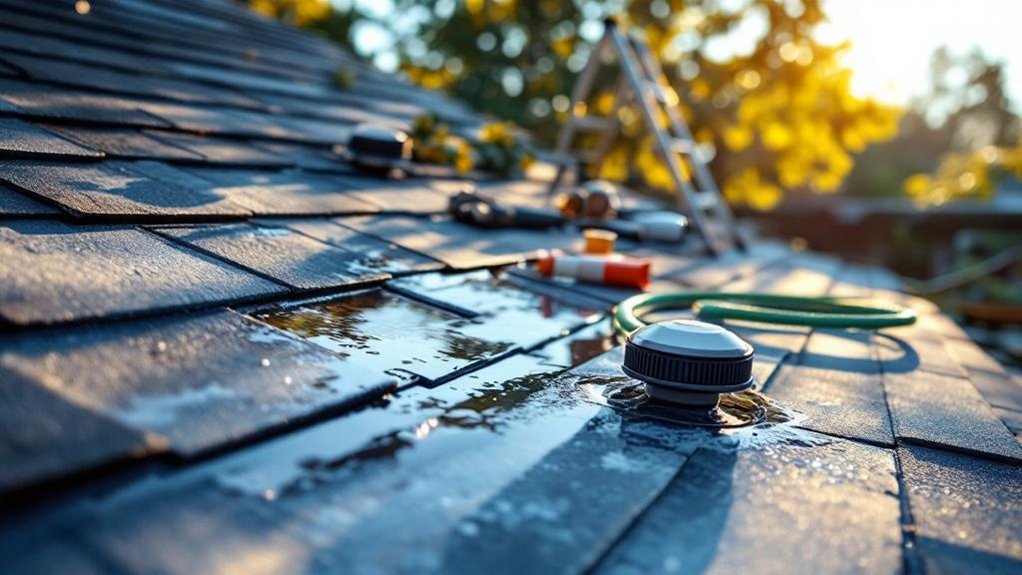
When implementing leak detection infrastructure on your roof, understanding the distinctions between wireless and wired monitoring systems becomes critical for maintaining structural integrity and preventing water damage. At CRF Roofing, we evaluate sensor performance against your specific roofing configuration—wireless sensors offer 30-60 minute installation versus wired’s 2-4 hours per unit.
Signal reliability remains superior in wired systems (99.9% uptime compared to wireless’s 95-98%), particularly through metal roofing materials where 2.4GHz signals degrade 15-25%. Consider your maintenance schedules carefully—wireless requires battery replacement every 2-3 years, while wired systems eliminate this concern but need quarterly circuit checks. For optimal long-term reliability, hard-wired systems are the preferred choice for areas that are easily accessible during installation.
Our cost comparison reveals wireless carries 20-35% higher component costs offset by 40-60% lower labor, making hybrid solutions ideal for complex installation challenges where accessing attic spaces proves difficult. Regular inspections are essential for early detection of potential issues, helping to extend your roof’s lifespan and avoid costly repairs.
How Smart Roofing Systems Transform Leak Prevention
Beyond the technology comparison, smart roofing systems represent the next evolution in leak prevention infrastructure. At CRF, we’ve witnessed how sensor integration transforms reactive repairs into proactive maintenance protocols. IoT-enabled monitoring networks deploy strategically placed capacitance-based sensors at critical drainage points, seams, and penetrations.
These systems continuously monitor electrical resistance changes, identifying moisture infiltration before visible damage occurs. The predictive analytics component delivers exceptional value—analyzing historical data trends to forecast potential failure points based on weather patterns and roof aging metrics. The wireless data transmission to central systems ensures that all monitoring information is available for immediate analysis and response.
Our clients appreciate the immediate notification capabilities, with cloud-based alerts delivered via multiple communication pathways. This technology prevents 70-90% of potential water damage costs through early intervention. We provide 24-hour services for emergency situations when sensors detect critical roof issues requiring immediate attention. For thorough protection, we recommend multi-sensor verification systems that integrate with your existing building management infrastructure.
Non-Destructive Testing Methods for Existing Structures
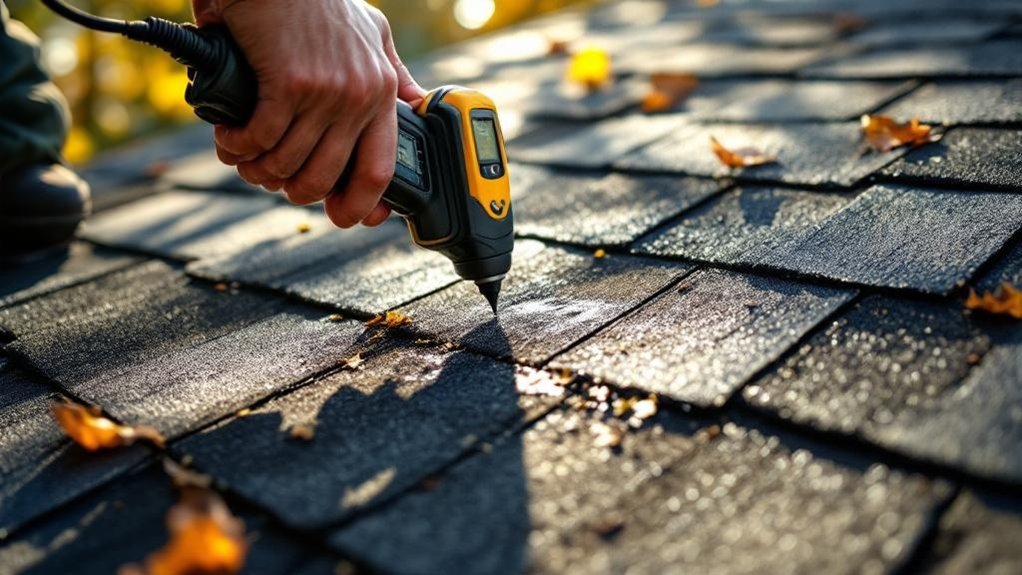
We employ industry-leading non-destructive testing methods to diagnose roof leaks without compromising structural integrity, including Electronic Leak Detection systems that pinpoint breaches with precision through electrical current analysis. Our certified technicians utilize thermal imaging technology to identify temperature differentials that indicate moisture intrusion, allowing for targeted remediation without extensive tear-offs. Advanced moisture detection equipment, including capacitive scanners and nuclear density gauges, enables us to accurately locate concealed dampness beneath membrane surfaces, ensuring thorough assessment while maintaining warranty compliance. These non-destructive techniques are particularly valuable as they provide quick and efficient assessment during routine inspections without damaging the roof surface. Our experienced restoration team is trained to detect issues early, helping to prevent water damage restoration costs that often arise from unaddressed leaks.
Electronic Integrity Testing
Electronic Integrity Testing offers non-destructive assessment capabilities that revolutionize how we identify and address roof membrane vulnerabilities. We utilize both high and low-voltage ELD systems to detect breaches that visual inspections typically miss. These methods require conductive substrates beneath the roof membrane, creating an electrical field that identifies discontinuities with remarkable inspection accuracy.
Our IntegriScan technology complies with ASTM Guide D7877, providing precise leak identification throughout your roof’s service life. Unlike traditional flood testing, electronic testing eliminates structural load risks while greatly improving maintenance efficiency. This approach significantly reduces the need for extensive roof repairs or complete replacements by pinpointing exact breach locations.
For non-conductive substrates, we implement TruGround® medium—FM approved and UL listed—ensuring thorough testing capabilities on both horizontal and vertical surfaces. This methodology allows us to detect minute breaches, providing you with definitive documentation of your waterproofing system’s integrity.
Thermal Imaging Applications
While Electronic Integrity Testing provides precise leak detection through electrical systems, Thermal Imaging Applications represent another advanced non-destructive methodology in our thorough inspection arsenal. Our certified thermographers utilize infrared technology to capture thermal radiation emitted from your roof structure, creating extensive moisture mapping profiles without compromising membrane integrity.
We conduct surveys during ideal conditions—post-solar loading followed by radiational cooling—when temperature differentials between saturated and dry materials are most pronounced. This specialized process identifies trapped moisture beneath membranes that conventional visual inspections cannot detect. Water-saturated areas in your roofing insulation will typically appear as distinctive hot spots on our thermal imaging displays due to their heat retention properties.
As your trusted Owens Corning Preferred Contractor, we employ NIST-verified thermal imaging protocols to pinpoint compromised areas with precision, allowing for targeted remediation before leaks manifest as interior damage. This preventative approach safeguards your property investment while maximizing your maintenance budget through early intervention.
Moisture Detection Methods
To guarantee ideal diagnostic accuracy without compromising structural integrity, our extensive moisture detection methodology employs multiple non-destructive testing (NDT) protocols for existing roofing systems.
Our certified technicians utilize ANSI/SPRI/RCI NT-1 compliant nuclear testing to measure hydrogen density through neutron moderation, effectively detecting subsurface moisture regardless of ambient temperatures. We complement this with capacitance testing that measures dielectric constant variations where water infiltration occurs. For pinpoint leak identification, our team implements electric vector mapping by creating conductive layers that reveal breaches in waterproofing membranes. Our thorough approach includes resistance probes that quantify moisture percentages and handheld moisture meters like the Tramex Dec Scanner DS2 for instant verification readings. Scheduling biannual testing during spring and fall provides the most comprehensive assessment of weather-related damage to your roofing system.
Trust our team’s expertise in deploying these advanced technologies to safeguard your investment with precision diagnostics and targeted remediation strategies.
Implementing an Effective Roof Monitoring Strategy
Since proper detection systems form the foundation of long-term roof integrity, we’ve developed extensive monitoring protocols that identify vulnerabilities before they escalate into costly structural damage. Our proactive measures incorporate advanced monitoring technology like EFVM and IntegriScan systems that comply with ASTM D8231 standards.
We implement TruGround® conductive mediums on non-conductive substrates to guarantee thorough electronic testing capabilities. For peak performance, our team installs R.O.S.I. systems—whether PROOF (passive) or HYBRID versions—according to strict technical specifications. These systems create a low-voltage electric field that precisely identifies membrane breaches down to pinhole size. The PermaScan continuous monitoring system provides real-time data for making timely maintenance decisions. Our bi-annual inspection schedule ensures comprehensive monitoring and helps prevent potential safety hazards that could impact your business operations.
Join our community of protected properties where electronic leak detection provides documented verification of roof integrity, extending service life while considerably reducing your long-term maintenance costs.
Beyond Detection: Turning Insights Into Preventative Maintenance
Detection systems only mark the beginning of proper roof management. At CRF Roofing, we transform inspection data into thorough preventative maintenance protocols tailored to your structure’s specific vulnerabilities. Our biannual assessment schedule—strategically timed during seasonal changes—identifies critical intervention points before moisture infiltration compromises structural integrity.
Proactive strategies include addressing flashing deterioration, which prevents approximately 70% of potential leak points when remediated promptly. We emphasize proper drainage system maintenance through scheduled gutter cleanings that greatly mitigate water-related damage risks. Additionally, we recommend selective canopy management to minimize moisture-prone conditions where biological growth compromises roofing materials. Regular inspections after severe weather events help identify hidden damage before it develops into costly leaks. We offer free quotes for residential and commercial properties experiencing potential roofing issues.
Our documentation practices guarantee maintenance records support insurance claims while establishing property value enhancement through verifiable care—protecting your investment through systematic, evidence-based interventions.
Frequently Asked Questions
How Long Do Roof Leak Detection Systems Typically Last Before Needing Replacement?
We install permanent electronic leak detection systems with 15-20 year system longevity. Our customers appreciate that these systems require minimal maintenance requirements, ensuring your home’s protection throughout the roofing lifecycle.
Can Leak Detection Systems Be Installed During Winter Months?
We face significant constraints with winter installation of leak detection systems due to temperature-dependent membrane adhesion requirements and water-freezing limitations. Our team recommends scheduling leak prevention assessments during fall for ideal safety and functionality.
Are Roof Leak Detection Systems Tax-Deductible for Commercial Property Owners?
Yes, commercial leak detection systems typically qualify for tax advantages as deductible maintenance expenses under IRS guidelines. You’ll avoid property depreciation while maintaining compliance with Section 179 provisions. We’ll help document your deduction properly.
How Do Insurance Companies View Properties With Leak Detection Systems Installed?
We’ve observed insurers offering premium discounts during risk assessment for properties with leak detection systems, as these installations demonstrate proactive mitigation strategies that reduce claims frequency and severity in your investment portfolio.
Can Detection Systems Identify Leaks From HVAC Units Versus Actual Roof Failures?
Our detection systems differentiate HVAC leak detection indicators (consistent drips unrelated to rainfall, linear stains following ductwork) from roof failure indicators (storm-correlated leaks, penetration-point damage) through systematic diagnostic protocols.
Conclusion
We’ve demonstrated how a proactive leak detection protocol is indispensable to your facility’s structural integrity. By implementing our recommended multi-point monitoring system with moisture-activated sensors, you’ll mitigate catastrophic envelope failures before they compromise building systems. Don’t overlook your roof’s thermal profile—infrared assessment can identify subsurface saturation invisible to visual inspection. Remember: EPDM membrane deterioration accounts for 64% of premature system failures. Act now to safeguard your investment.