
When deciding between roof repair or replacement, we need to weigh several factors carefully. For roofs under 15 years with minimal damage, repairs (averaging $392-$1,913) often make sense. However, if your roof exceeds 20 years or shows widespread issues, replacement ($5,000-$30,000) offers better long-term value, with 60-65% cost recovery at resale and 15-25% energy savings. Consider hidden costs like structural repairs, which can increase expenses by 40-60%. The following considerations will help you make this essential investment decision.
Key Takeaways
- Evaluate the roof’s age, as those over 20 years old are better candidates for replacement than repair.
- Compare long-term costs, as repeated repairs ($12,000 over 10 years) often exceed one-time replacement ($11,000).
- Consider hidden costs like structural damage, which can increase repair expenses by 40-60%.
- Assess visible damage signs including missing shingles, water stains, and sagging areas to determine severity.
- New roofs offer warranties, improved energy efficiency (15-25% savings), and increased property value.
Assessing the Current State of Your Roof
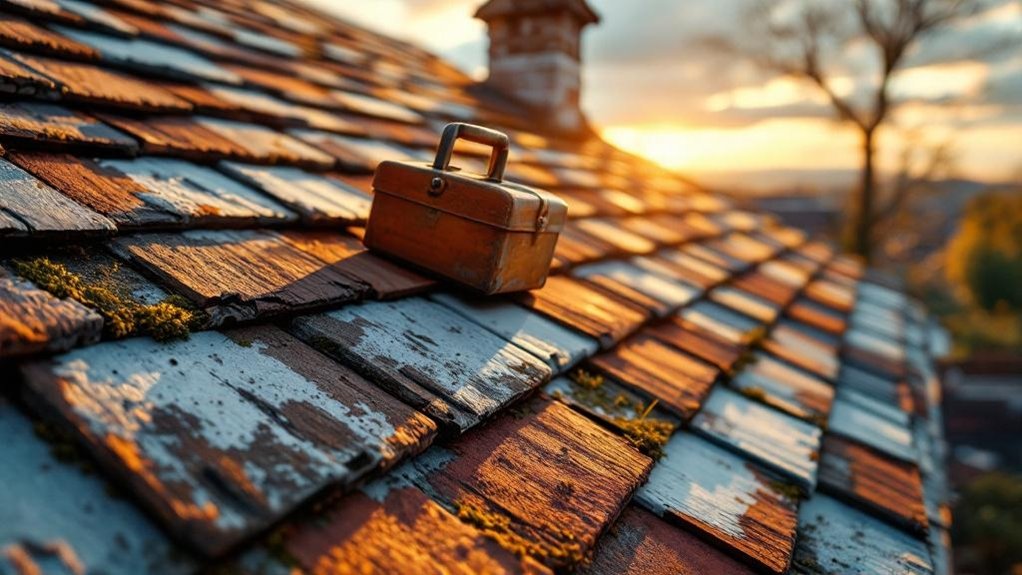
How can you determine if your roof needs attention? At CRF Roofing & Restoration, we utilize advanced roof inspection technologies to provide accurate damage assessment. We employ drones with high-resolution cameras to capture detailed images from angles invisible from ground level. Our infrared scanners detect temperature variations as small as 0.1°C, revealing hidden moisture intrusion. We also use precise moisture meters to measure water content in your roofing materials, providing crucial data on potential damage.
Look for visible indicators like missing or curling shingles, rust spots on metal components, or interior water stains. These warning signs shouldn’t be ignored. Professional inspectors can identify subtle lifting at shingle edges that often creates entry points for water and leads to structural problems. We document everything using standardized Roof Condition Index systems and thorough reports that prioritize deficiencies into immediate repairs, scheduled maintenance, and long-term planning.
As your neighbors in the Greensburg community, we’re committed to helping you make informed decisions about your home’s protection.
The True Cost Breakdown: Repair vs. Replacement
When comparing roof repairs to full replacement, we’re looking beyond the immediate price tag to understand both lifetime expenses and hidden costs that affect your long-term budget. We often see homeowners focus on the upfront repair costs ($392-$1,913 average range) without considering how multiple repairs can exceed the value of replacement over time. A complete roof replacement may require a larger initial investment ($5,000-$30,000 depending on your home size and materials), but includes warranties, improved energy efficiency, and increased property value that offset costs across the system’s 25-30 year lifespan. As a Preferred Contractor with Owens Corning, we provide exclusive warranty options that significantly enhance the value proposition of a full replacement. For homeowners planning to sell, a new roof can be a significant selling advantage, often resulting in higher sale price when the property enters the market.
Immediate vs. Lifetime Expenses
The financial reality of roof maintenance extends far beyond the initial invoice you’ll receive. While repair costs seem attractive at $250-$750 for minor issues, these short term costs accumulate considerably over time. We’ve found homeowners spending around $12,000 on cumulative repairs over 10 years, compared to a one-time $11,000 replacement investment that lasts 25-30 years with warranty protection. Insurance typically covers sudden damage repairs but not gradual wear-and-tear issues that lead to more frequent expenses.
The numbers tell a compelling story—replacements deliver long term savings through eliminated recurring damage risks, 10-15% energy efficiency improvements ($150-$300 annual utility savings), and 15-40% property value increases. Additionally, repaired roofs show 67% higher likelihood of recurring problems within 5 years versus new installations with 20-30 year warranties. We recommend considering this lifetime cost break-even analysis when making your decision.
Hidden Costs Revealed
Many homeowners are shocked when initial roof repair estimates balloon into much larger expenses due to hidden costs that aren’t immediately apparent. At CRF, we’ve seen how underlying structural damage can increase costs by 40-60% when left unaddressed.
Consider this: 30% of roof repairs uncover unexpected decking issues, adding $500-$2,000 to initial quotes. Emergency repairs typically incur a 15-25% premium, and 45% of these reveal undiagnosed mold requiring remediation.
During our structural assessments, we often identify ventilation problems that, while adding 8-12% to project costs, prevent $4,000+ in future moisture damage. A professional inspection can help determine if your issues require targeted roof repair or a complete replacement based on the age and extent of damage. Permit fees ($100-$500) and disposal costs ($300-$500) are also commonly overlooked.
Understanding these hidden costs helps you make informed decisions between repair and full replacement.
Material Considerations for Your Roofing Project
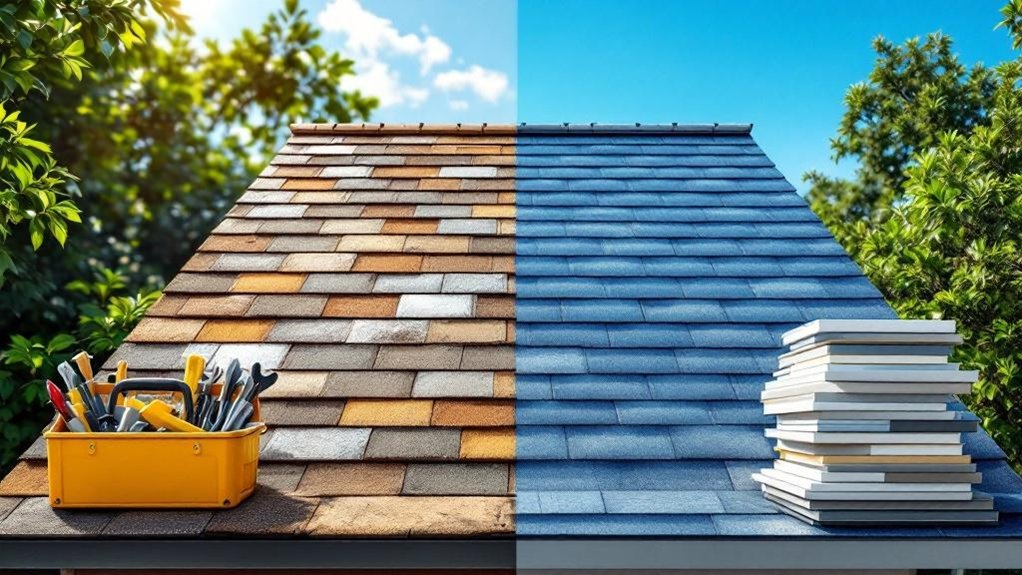
Choosing the right roofing material stands as one of your most critical decisions during any roof project. As installation techniques evolve with roofing trends, we’re seeing homeowners weigh durability against cost more carefully than ever.
Asphalt shingles remain the budget-friendly option at $400-$600 per square with 20-30 year lifespans, while metal roofing offers exceptional longevity at $10-$25 per square foot installed with 50-year warranties. For the ultimate in durability, slate delivers 75-100+ years of protection but requires structural reinforcement due to its weight.
Wood shingles provide natural beauty and energy efficiency at $6-$14.30 per square foot, while synthetic alternatives offer similar aesthetics with improved weather resistance at a lower price point. Synthetic shingles are increasingly popular due to their high impact resistance and impressive 40-50 year lifespan. We’ll help you balance these considerations against your home’s structural capabilities and long-term goals.
Warning Signs That Indicate Replacement Is Necessary
Recognizing when your roof has moved beyond repair into replacement territory requires careful evaluation of several critical warning signs. At CRF Roofing, we look for advanced shingle deterioration like curled edges, widespread cracking, and significant granule loss in gutters—all indicators that your roof’s protective capabilities are compromised.
Structural compromise manifests as visible sagging, uneven valleys holding water, or unusual sounds from stressed components. Persistent water damage, evidenced by interior stains or visible daylight through attic boards, typically requires full replacement. If your neighbors are getting new roofs, it may suggest your home is also due for replacement since houses built during the same period often experience similar issues.
We also evaluate biological growth impact—extensive moss retaining moisture or widespread algae affecting over 30% of the surface can accelerate deterioration beyond repair. When these conditions combine with a roof exceeding 20 years, replacement becomes your safest, most cost-effective solution. Our expert team can determine if your roof needs replacement during a thorough free inspection, ensuring transparency and appropriate recommendations for your specific situation.
When Repairs Make Financial Sense
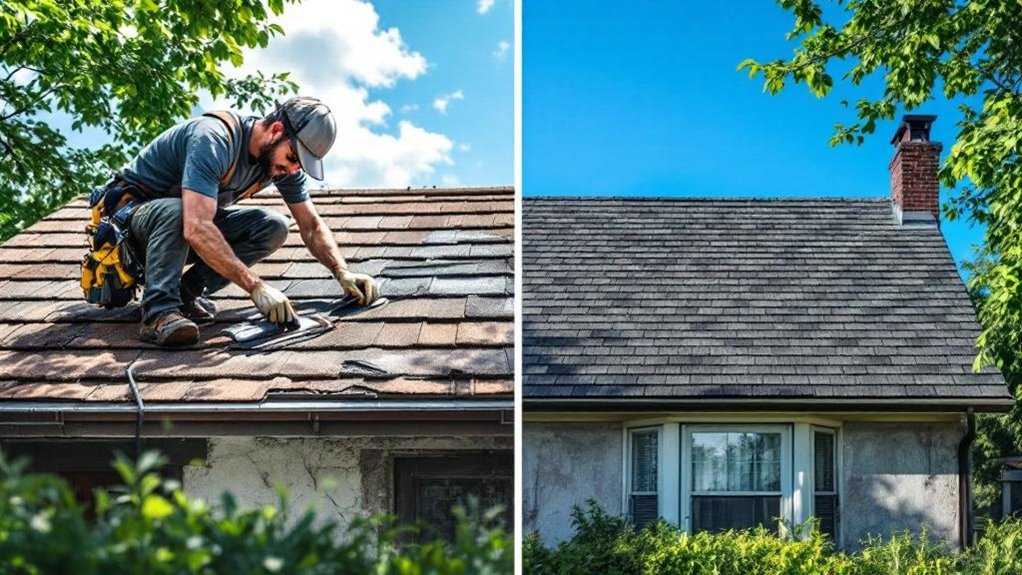
We recommend roof repairs as financially prudent when dealing with minor damage that affects less than 30% of your surface area, especially for roofs under 15 years old. Our repair options range from simple shingle replacements starting at $150-$400 to targeted solutions for isolated leaks or wind damage, offering significant savings compared to full replacement costs of $5,000-$20,000+. If your roof maintains structural integrity without widespread deterioration, these cost-effective repairs can extend your roof’s lifespan while allowing you to budget for eventual replacement on your own timeline. Delaying necessary repairs, however, can lead to escalating damage and significantly higher costs down the road. For homes in Southeastern Indiana experiencing sudden roof problems, we provide 24-hour response services to prevent further property damage during emergencies.
Minor Damage Coverage
When minor damage affects your roof, financially sound repair options often present themselves as the most practical solution. Insurance typically covers emergency repairs for minor leak situations with lower deductibles than full replacements. Localized wear, small punctures, or damage limited to less than 10-15% of your roof’s surface are prime candidates for targeted repairs.
We’ve found that repair costs typically range from $300-800 for isolated issues, compared to $8,000-$25,000 for complete replacement. This represents a five to ten times cost savings for our customers. Additionally, manufacturer warranties often cover specific repairs within designated timeframes, providing financial protection for qualifying damage. If your roof is under 15 years old with documented maintenance history, repairs not only make financial sense but preserve your existing warranty coverage. If you experience website access issues while researching roofing companies, you might encounter security measures designed to protect legitimate websites from attacks.
Multiple Repair Options
Several cost-effective repair options exist when your roof sustains limited damage but maintains its structural integrity. When damage affects less than 30% of your roof’s surface area, targeted repairs make financial sense. For isolated incidents like missing shingles or flashing issues, costs typically range from $150-$800—substantially less than full replacement.
We recommend considering seasonal maintenance for repairs during winter months when labor costs drop 10-15%. The average cost of roof repair in the U.S. is $1,147, falling well below replacement costs. Even temporary fixes can prevent water intrusion while you plan for more thorough work. For asphalt shingles specifically, repairs prove more economical than with specialty materials like slate or tile.
Remember that accessibility matters—repairs confined to easily reached sections without complex scaffolding needs will maximize your savings while still protecting your home from potential water damage.
Under 15-Year Lifespan
Most 15-year-old roofs still retain significant value and serviceable life, making repairs financially advantageous compared to full replacement. As your trusted local contractors, we recommend prioritizing repair for asphalt shingles that typically last 20-30 years. By addressing minor issues promptly, you’ll prevent costly escalations while maximizing your initial investment.
Key longevity factors include proper ventilation and installation quality. Choosing light-colored roofs for your repair patches can help reduce heat absorption and slow deterioration, especially in sunny regions. Our professional inspections can identify specific wear patterns and damage extent to determine ideal repair strategies. Remember, restoration treatments extend roof life for 80% less than replacement costs.
With regular maintenance tips like annual inspections and timely repairs, your roof can exceed its expected lifespan by 5-10 years. This approach not only preserves active warranty coverage but provides superior return on investment—a smarter choice for protecting your home.
Long-Term Value and Return on Investment
Investing in your roof represents one of the most significant financial decisions you’ll make as a homeowner, with long-term implications that extend far beyond the initial price tag. While repairs may seem economical initially, replacement often delivers superior investment strategies for your property. Consider that homeowners typically spend upwards of $12,000 on recurring repairs over a decade—often exceeding the cost of a one-time replacement.
Current market trends show homes with newer roofs sell 2.5 times faster, with replacement recovering 60-65% of costs at resale. Premium materials like slate can last 75-100 years, dramatically reducing your cost-per-year of ownership. Plus, the energy efficiency gains from modern roofing systems cut cooling expenses by 15-25% annually, creating ongoing returns on your investment through reduced utility bills. Our insulated metal panels offer exceptional energy performance that can significantly enhance your home’s overall efficiency while withstanding Indiana’s challenging weather conditions.
Hidden Expenses to Consider in Your Decision
While homeowners often focus on the quoted price of roof repairs or replacements, these estimates frequently exclude significant hidden expenses that can dramatically impact your final budget. At CRF, we’ve seen structural repairs costing $3,000-$6,000 emerge mid-project when rotten decking or damaged rafters are discovered after removing old shingles.
Other unexpected material expenses include mold remediation ($500-$6,000+), ventilation upgrades ($300-$1,200), and tear-off costs ($1-$5 per square foot). Even gutters and fascia boards might need replacement ($1,000-$2,500) when they’ve deteriorated alongside your roof.
We recommend thorough pre-project inspections to identify these hidden repair costs before work begins. This transparency helps you make informed decisions and avoid the shock of mid-project discoveries that can stretch your budget beyond expectations. Requesting fully itemized costs from your contractor will protect you from unexpected charges and ensure clear documentation of all potential expenses.
Understanding Warranty and Insurance Implications
When deciding between roof repair and replacement, warranty and insurance implications should factor heavily into your decision-making process. Most home warranties exclude complete roof replacements, though some offer limited leak coverage as add-ons. Meanwhile, homeowner’s insurance typically only covers sudden, unexpected damage—not wear and tear.
We’ve seen many clients face warranty exclusions when attempting repairs on aging roofs. Remember that full replacements come with robust manufacturer warranties, while repairs rarely include guarantees. Additionally, insurance requirements often change for older roofs, with some companies mandating replacement once a certain age threshold is reached.
Always document all damage thoroughly before making repairs, as proper evidence is essential for successful insurance claims. Consider getting a FREE quote to understand your specific roofing options before filing an insurance claim. These considerations could profoundly impact the financial wisdom of repair versus replacement.
Creating a Strategic Plan for Your Roofing Decision
Creating a strategic plan for your roofing decision requires careful consideration of both immediate needs and long-term implications. We recommend starting with a thorough assessment of your roof’s age, condition, and the extent of damage to determine whether repair or replacement makes financial sense.
For emergency repairs ranging from $250-$10,000, we can provide quick solutions within 1-2 days. However, if your roof is over 20 years old or showing multiple issues, replacement at $20,000-$30,000 delivers better long-term value with a 20-30 year warranty and potential energy savings of 10-15%.
Budget planning should factor in hidden costs like structural repairs ($1.50-$3.00/sq ft) and disposal fees. Remember that spending $12,000 on ongoing repairs over a decade often exceeds the value of a quality replacement that lasts 25+ years. Our free consultations provide personalized guidance to help you make the most cost-effective decision for your specific situation.
Frequently Asked Questions
How Will Weather Conditions Affect My Roof Project Timeline?
We’ll monitor weather forecasts closely when scheduling your project. Rain, extreme temperatures, and wind can all cause delays, while seasonal considerations help us choose ideal installation windows for safety and quality results.
Can I Stay in My Home During a Complete Roof Replacement?
Yes, you can stay home during your roof replacement. We’ll implement safety precautions around the perimeter, but be prepared for significant noise levels throughout the project. Many of our customers do this comfortably.
What Financing Options Are Available for Major Roofing Projects?
We offer several financing solutions including personal loans with quick approval, home equity options with lower rates, and our exclusive Owens Corning partnership plans with 0% interest for qualified homeowners. We’ll help you choose wisely.
How Do Solar Panel Installations Impact Roofing Decisions?
We recommend evaluating roof condition before solar panel installation. Your roof needs adequate strength and remaining life to maximize solar panel benefits. We’ll assess structural integrity and recommend repairs or replacement when necessary.
What Permits Are Required for Roof Repairs Versus Full Replacements?
Minor repairs typically don’t require permits, while full replacements do need them. We’ll help navigate local regulations and permit types to guarantee your project is compliant and safe throughout the process.
Conclusion
We’ve seen firsthand that the repair vs. replacement decision isn’t always straightforward. Whether you choose to repair or replace, don’t compromise on quality materials or professional installation. Always consider your roof’s age, extent of damage, and long-term plans for your home. Remember, a well-timed replacement often provides better ROI than multiple repairs. When in doubt, consult with a certified contractor who’ll prioritize your safety and investment.